
A useful conversation starts with the actual medicines, the actual label and an honest account of what you take. A broad online list cannot clear an individual combination.
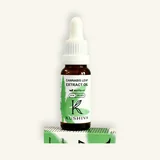
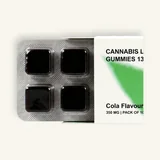
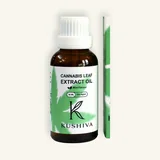
Kushiva makes AYUSH-licensed cannabis leaf extract in four formats, from Rs 1,199, with a certificate of analysis behind every batch.See the range
This article is general information, not medical advice. Vijaya (cannabis leaf extract) is prescription-regulated in India and should be used only under the supervision of a registered medical practitioner. Nothing here sets a dose: how much is right for you depends on your prescription, the strength of the product, your health condition, how your body responds, and any other medicines you take. That is a conversation with your doctor, not a website.
General education, not a diagnosis, interaction clearance or treatment plan. Do not stop, replace or adjust prescribed medicines based on this article.
Key takeaways
- Interactions are not one thing. Pharmacokinetic (how much drug reaches the blood) and pharmacodynamic (overlapping effects) are different problems.
- Bring the actual pack. "Herbal" or "natural" tells a pharmacist nothing they can act on.
- List everything - prescriptions, over-the-counter, supplements, and anything taken occasionally.
- A documented interaction in a study carries more weight than a theoretical online list.
- Never stop or adjust a prescribed medicine on the strength of an article.
Quick answer
Can vijaya interact with medication? Cannabis constituents can interact with medicines. The significance depends on the compounds present, exposure, other treatments and the person's health. A clinician or pharmacist needs more than the words natural, herbal or full spectrum to assess that risk.
Two different kinds of interaction
An interaction can involve what the body does to a substance, or what several substances do to the body together. In the first case, one substance may alter the processing of another, changing exposure. In the second, effects such as reduced alertness may add together even without a major change in the amount of either substance in the blood.
The FDA warns that CBD can affect other medicines and that other medicines can affect CBD. It also identifies increased sedation risk when CBD is combined with alcohol or drugs that slow brain activity. These concerns are described in its consumer information on CBD. They are reasons for an individual review, not proof that every combination causes harm.
Vijaya is a name used for cannabis preparations; it is not a single standardized molecule. Two preparations described with the same word may not provide the same cannabinoid exposure. The site's explanation of cannabis extract and CBD terminology provides background, but a clinician needs the specific preparation's information.
A documented interaction is stronger evidence than a theoretical list
Different evidence types answer different questions. A laboratory experiment can identify a possible mechanism. A report about one patient can raise a safety signal. A controlled clinical study can characterize an interaction under defined conditions. None automatically describes every Indian whole-leaf preparation.
| Example | Documented concern | Important boundary |
|---|---|---|
| Clobazam | CBD can increase exposure to an active clobazam metabolite. | Clinical management belongs to the prescriber. |
| Valproate | Concurrent use is associated with a greater risk of liver-enzyme elevations. | This should not be reduced to a simple universal timing rule. |
| Alcohol and other central nervous system depressants | Sedation may increase. | The actual combination requires assessment. |
These examples come from the Epidiolex prescribing information, revised May 2026. Epidiolex is a purified prescription CBD medicine. Its evidence identifies real risks; its dosing and monitoring instructions should not be copied onto a different preparation.
Why absence of symptoms is not a complete safety check
A 28-day randomized trial summarized by the FDA studied oral CBD in healthy adults. At the exposures studied, the FDA reported liver-enzyme elevations above three times the upper limit of normal in a minority of CBD recipients and none in the placebo group. Participants with the elevations did not report associated clinical symptoms. This is evidence that some changes may be silent, not an estimate of the risk from a Kushiva product. FDA study summary.
A clinician can decide whether any examination or laboratory monitoring is relevant. A blood-test schedule cannot be selected responsibly just by matching the word CBD in an article to the word extract on a label.
CBD does not reliably cancel THC's effects
A small randomized crossover trial involving 18 adults found stronger effects and worse performance on some tasks when a high oral CBD exposure was combined with THC than when THC was given alone. Its controlled conditions do not establish the effect of every ratio or formulation. They do challenge the assumption that CBD always neutralizes THC. Zamarripa and colleagues, JAMA Network Open, 2023.
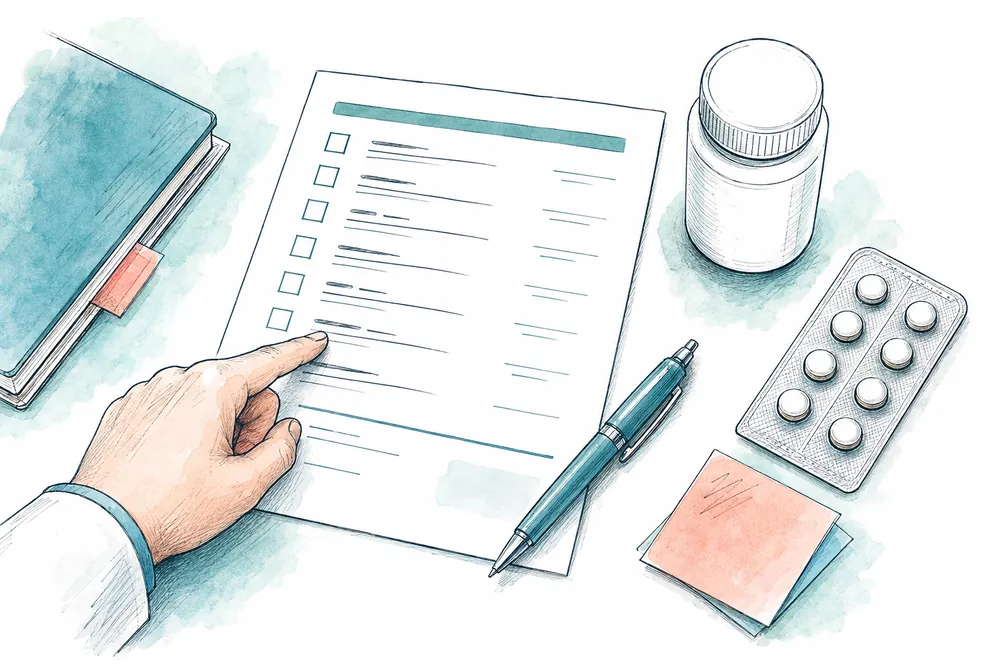
Build one complete medication list
Include medicines taken only occasionally. People often remember long-term prescriptions but leave out a sleep aid, a cold remedy or an over-the-counter allergy tablet. NCCIH explicitly notes that nonprescription medicines also need consideration when reviewing supplement interactions.
This original appointment worksheet organizes information for a professional review:
- Each prescription: name, strength, your prescribed schedule, reason for treatment and the prescriber's name.
- Occasional treatments: pain medicines, cold remedies, allergy medicines and sleep products, with the last time taken.
- Other substances: supplements, herbal preparations, alcohol, tobacco and any other substances, without omitting something because it feels embarrassing.
- The cannabis preparation: the complete label, batch number, available certificate of analysis and what you have actually used.
- Relevant history: previous adverse reactions, liver problems, falls, current symptoms and any upcoming procedure.
- Recent changes: anything started, stopped or changed, and the approximate date.
If an ingredient amount is unknown, write unknown. An honest gap is safer than a guessed concentration. For a guide to reading the supporting paperwork, see how to interpret a cannabis COA.
Questions that make the review useful
Ask which potential interaction matters most in your case, what evidence supports it, and whether the clinician has enough composition information to make an assessment. Request a clear distinction between a known interaction and a theoretical concern. Both may matter, but they should not be presented as equally established.
Also ask who will coordinate care if different clinicians prescribe your medicines. A consultation is less useful when each practitioner sees only part of the list. Ask how to reach the responsible clinician if a new prescription is added between appointments.
I am using or considering this preparation. Here is the full label and everything else I take. Could you review the combination, tell me what information is missing, and explain what changes or symptoms should trigger contact?
People searching for vijaya and antidepressants or vijaya and blood pressure medication should bring the exact drug names. Those categories contain medicines with different properties. A category-level article cannot decide that all are compatible, all are incompatible, or that a fixed gap between them solves the issue.
Make follow-up specific
After the appointment, write down the agreed plan, who is responsible for it, and the next review date. Keep a brief record of unexpected symptoms and when they occurred in relation to medicines, meals or other changes. This is information for the clinician, not a basis for adjusting the regimen yourself.
For severe symptoms such as trouble breathing, collapse or inability to wake someone, seek emergency assistance rather than waiting for a routine review. In India, 112 is the national emergency response number. For driving-related decisions, read the separate vijaya and driving safety guide.
Frequently asked questions
Can I simply take the two substances at different times?
Do not assume that a gap prevents an interaction. Processing effects and overlapping sedation are not reliably ruled out by a self-selected timetable. Ask the clinician about the actual combination.
Does a doctor review remove every risk?
No. A review can identify concerns and arrange follow-up, but incomplete product information, changing prescriptions and individual responses remain relevant. No review should be described as a guarantee.
Should I stop my other medicine if I suspect an interaction?
Contact the prescribing clinician promptly. Do not independently stop an essential medicine, especially one used for seizures or another serious condition. Urgent symptoms require urgent care.
Is a batch certificate enough to clear an interaction?
No. It may help identify composition, but it does not include your medical history or establish how a combination will affect you.
What if I cannot identify a tablet?
Bring its original strip, bottle or a clear photograph to a pharmacist. Do not identify medicines solely by colour or shape.
From Kushiva
Every order is reviewed by a doctor.
An in-house doctor reviews each order before it is dispatched, at no extra cost. Tell them what else you take.