


A package price cannot tell you the cost of a month of care. Consultations, follow-up, uncertain coverage and whether a treatment remains appropriate all affect the answer.
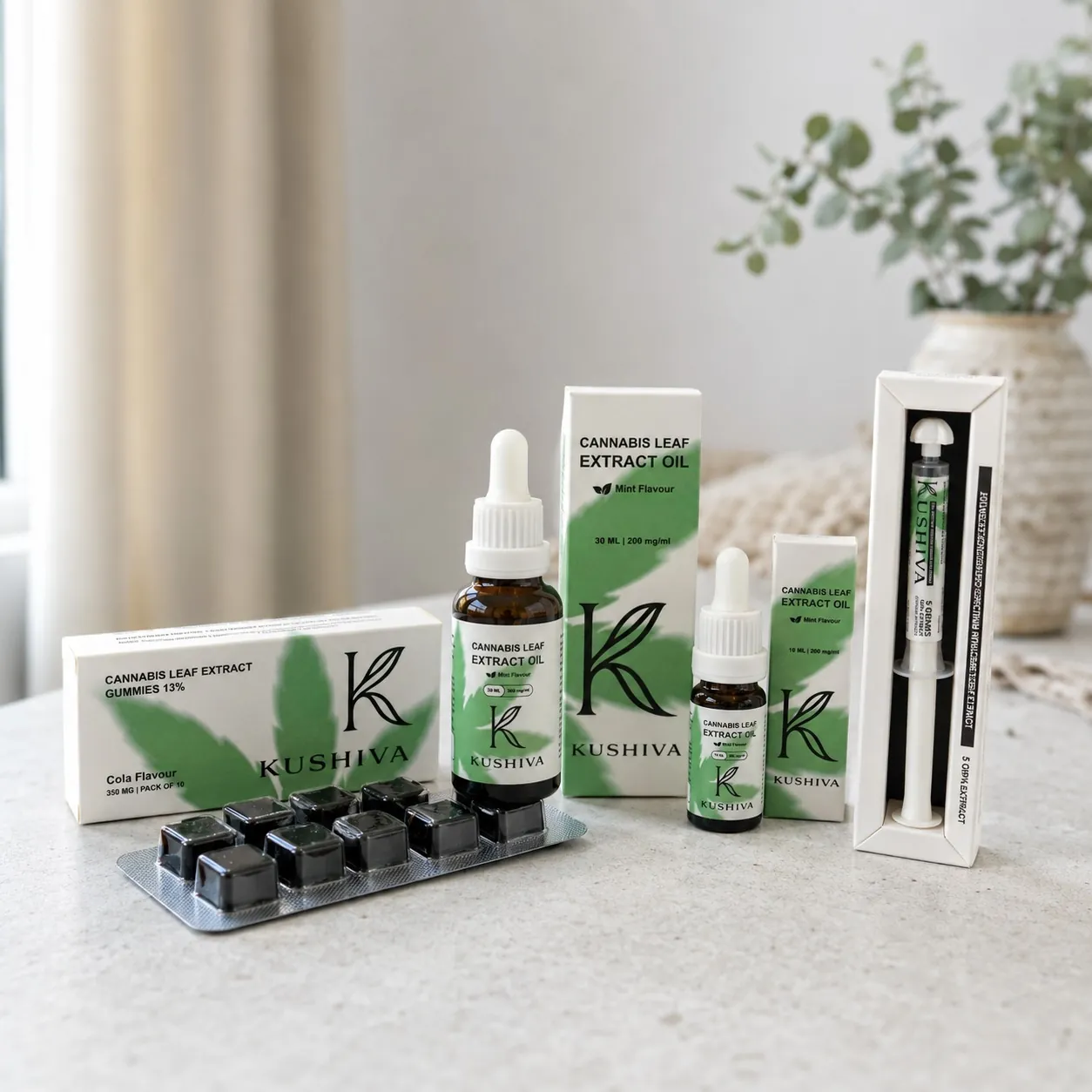
Kushiva makes AYUSH-licensed cannabis leaf extract in four formats, from Rs 1,199, with a certificate of analysis behind every batch.See the range
This article is general information, not medical advice. Vijaya (cannabis leaf extract) is prescription-regulated in India and should be used only under the supervision of a registered medical practitioner. Nothing here sets a dose: how much is right for you depends on your prescription, the strength of the product, your health condition, how your body responds, and any other medicines you take. That is a conversation with your doctor, not a website.
This is general healthcare-budget education. It does not recommend purchasing cannabis, compare suppliers or calculate a dose. No verified national monthly-cost average is established by the sources reviewed.
Key takeaways
- There is no honest single figure. Anyone quoting a national monthly average for vijaya is inventing it.
- The bottle price is one line. Consultations, follow-up and repeat reviews are the rest.
- Do not assume AYUSH coverage means reimbursement. Check your specific policy wording.
- Put uncertain costs in an uncertain column rather than treating them as covered.
- If it is not helping, the cost conversation is a clinical conversation. Raise it.
Quick answer
How much does vijaya cost per month in India? There is no defensible single figure to give from the evidence reviewed for this article. An individual estimate needs a clinician's actual plan, documented charges and confirmed coverage. A bottle price, an assumed daily amount or another person's experience cannot provide that estimate.
Why the advertised price is not the answer
A monthly cost is a time-based estimate. A package price is a transaction amount. Connecting them requires information about a treatment plan and its duration, and those cannot be invented for a budgeting article. A preparation may be changed or discontinued after review; monitoring and appointments may differ between people.
Even the word strength needs care. A label may state the mass of leaf extract rather than the mass of CBD or THC. Different measurement conventions make simple price-per-milligram comparisons potentially misleading. The COA reading guide explains the distinction without turning it into a dosing calculator.
An honest estimate should say what it covers, which period it describes, what is confirmed and what remains conditional. If those assumptions are absent, a precise rupee figure may be less useful than a clearly labelled unknown.

Separate the components of care
NCCIH's guidance on paying for complementary health approaches recommends asking about appointment charges and coverage. Its health-system examples are American, but the practical distinction between quoted fees and confirmed insurance benefits is useful elsewhere. It does not establish Indian vijaya prices.
| Expense | What to establish | Common uncertainty |
|---|---|---|
| Initial assessment | Its fee, scope and whether a written plan is provided | Whether later reviews are included |
| Follow-up | Who conducts it and how it is charged | Extra visits if symptoms or medicines change |
| Investigations | Which tests the clinician actually considers necessary | Whether quoted charges include those tests |
| Prescribed treatment | The documented expense under the clinician's plan | A change in the plan after reassessment |
| Transport and time | Travel to appointments and time away from work | Additional support or alternative transport |
| Insurance | The exact service confirmed as covered | Exclusions, limits and claim approval |
This table is a planning framework, not a claim that every person requires every item. Do not arrange tests simply to complete a spreadsheet. Ask the clinician why a proposed investigation is relevant and whether an existing result can inform the review.
Likewise, an included initial consultation should not be assumed to include unlimited future care. Ask what happens if there is an adverse reaction, if another doctor changes a prescription, or if the original clinician is unavailable.
Does AYUSH coverage mean this expense is covered?
Do not assume that a reference to AYUSH in a policy guarantees reimbursement for a particular outpatient consultation or preparation. IRDAI's health-insurance information distinguishes available types of cover and emphasizes policy terms, exclusions and limits. The actual contract and insurer's written response are needed to assess a specific expense.
Send the insurer the precise service description rather than asking only whether Ayurveda is covered. Ask separately about consultation, outpatient treatment, investigations and any prescribed preparation. State whether the expense is proposed or already incurred.
- Is this specific outpatient expense eligible under my policy?
- Is prior authorization necessary?
- Are there provider or facility requirements?
- What limits, exclusions, deductibles or co-payments apply?
- What documents are required, and where is the relevant clause?
- Is this response an eligibility explanation or an actual claim approval?
Record the response date and reference number. A general phone assurance and a written decision on a submitted claim are not interchangeable. Until an amount is confirmed, keep it in the uncertain column of your budget rather than treating it as guaranteed reimbursement.
A worksheet that makes the uncertainty visible
For an upcoming calendar month, list expected healthcare expenses using written quotes or existing invoices. Mark each as confirmed, estimated or not yet known. The following blank worksheet is deliberately not filled with invented market prices:
| Item | Amount and date | Evidence | Status |
|---|---|---|---|
| Assessment or scheduled review | Enter actual information | Clinic quotation | Confirmed / estimated |
| Clinician-requested tests | Enter if applicable | Written request and quote | Confirmed / unknown |
| Existing prescribed-care expenses | Enter documented expense | Invoice or care estimate | Actual / estimated |
| Travel or support | Enter personal estimate | Appointment arrangements | Estimated |
| Approved reimbursement | Enter only if confirmed | Insurer's approval | Approved / pending |
Maintain a second column for actual spending as the month progresses. This avoids confusing the amount expected with money already paid. If a reimbursement is pending, record it separately from money actually received.
Keep the medical and financial questions connected but distinct: is the plan clinically appropriate, and can its confirmed costs be accommodated? A cheaper plan is not automatically appropriate, and an expensive plan is not automatically more effective.
What if vijaya is not helping?
Do not treat money already spent as a reason to continue indefinitely or increase the amount. Discuss the lack of benefit with the treating clinician. NCCIH advises against using an unproven approach to replace appropriate medical treatment or postpone assessment of a health problem. NCCIH decision guidance.
Before or during a treatment trial, ask the clinician what outcome is being assessed, when it will be reviewed and what would support changing or ending the plan. The review point should be individualized; a seller's universal promise that everyone needs a fixed number of weeks is not a substitute.
A brief record can help: note the symptom or functional difficulty being assessed, changes in ordinary activities and any unwanted effects. Take the record to the appointment. Do not interpret feeling sedated as proof that the underlying problem is improving.
If you feel unable to reduce use despite wanting to, mention that directly. The article on dependence and cannabis use disorder explains why this deserves attention. A plan for stopping or changing treatment belongs with the clinician, especially when other medicines are involved.
Be direct about affordability
A useful sentence is: I need a plan whose total ongoing expense I can understand, and I cannot assume an insurance payment that has not been approved. Ask the clinician to discuss appropriate alternatives, including established care options, rather than quietly skipping follow-up or altering prescriptions to fit a budget.
Also ask for an explanation of any proposed recurring charge. The goal is not to negotiate clinical decisions from a price list; it is to ensure that financial uncertainty is visible when decisions are made.
Frequently asked questions
Can this article give me a typical monthly rupee amount?
No. The sources reviewed do not establish a representative Indian monthly figure, and a product-price list would not account for an individual's care. A number without those inputs would be speculative.
Is an oil-versus-gummy price comparison enough?
No. Different formulations, quantities and measurement units cannot establish clinical equivalence or monthly treatment requirements.
Does AYUSH insurance automatically reimburse a preparation?
Do not assume so. Confirm the exact expense, care setting and policy terms with the insurer in writing.
Should I continue because I have already paid?
Past spending is not evidence of benefit. Discuss effectiveness, unwanted effects and next steps with the treating clinician.
What information should I bring to the review?
Bring the treatment information, medication list, expense record and questions about affordability. The medication-review worksheet can help organize the clinical information.
From Kushiva
Every price is on the page.
Oils at Rs 1,199 and Rs 2,490, gummies at Rs 3,550, enriched extract at Rs 3,500 - inclusive of GST, with no consult-first pricing.