


A household safety plan needs to work when someone is distracted, a visitor arrives or a child opens a bag. Good intentions alone are not a storage system.
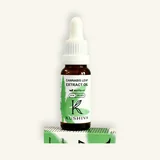
Kushiva makes AYUSH-licensed cannabis leaf extract in four formats, from Rs 1,199, with a certificate of analysis behind every batch.See the range
This article is general information, not medical advice. Vijaya (cannabis leaf extract) is prescription-regulated in India and should be used only under the supervision of a registered medical practitioner. Nothing here sets a dose: how much is right for you depends on your prescription, the strength of the product, your health condition, how your body responds, and any other medicines you take. That is a conversation with your doctor, not a website.
Possible poisoning now? Seek immediate medical advice. For loss of consciousness, trouble breathing, a seizure or another emergency in India, call 112. Do not wait for this article or a seller's reply.
Key takeaways
- Original containers, locked, out of reach, away from food. That is the whole storage system.
- An uneventful first hour proves nothing. Swallowed cannabis can take hours to take effect.
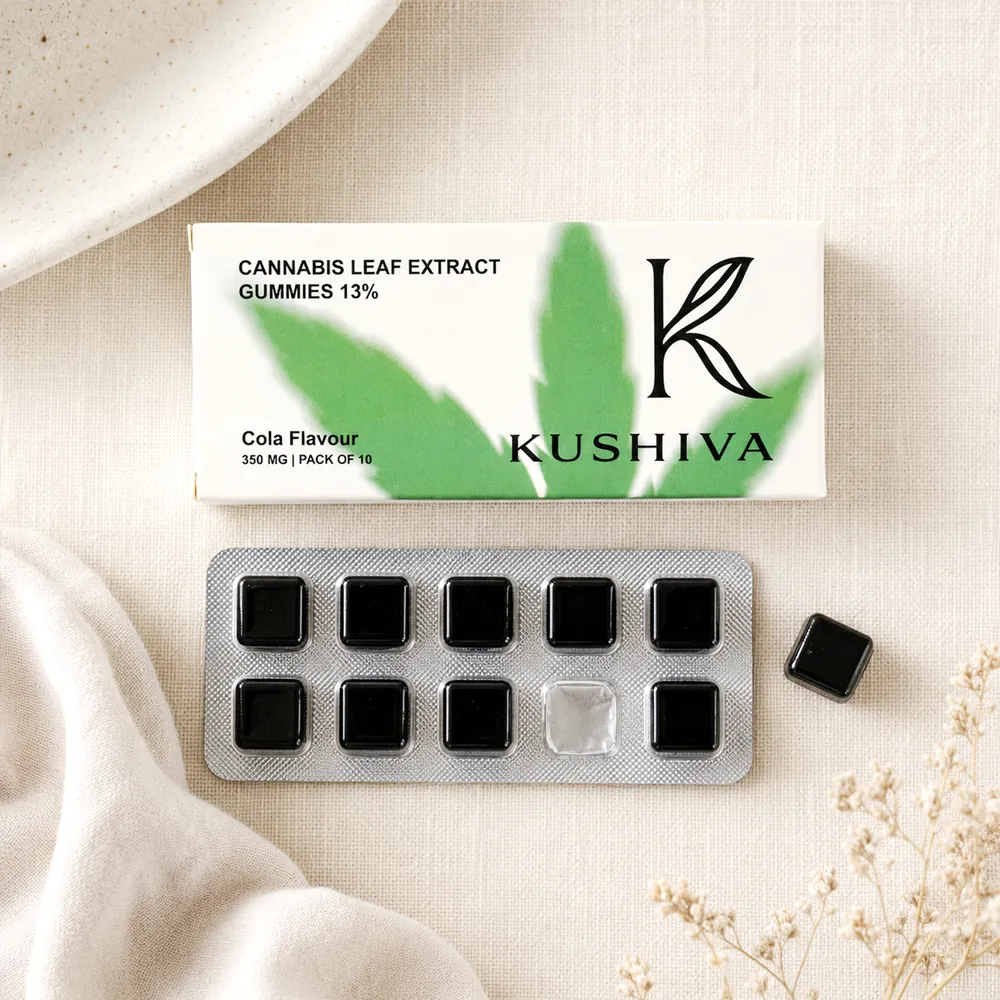
- Edible formats are the highest-risk items in the house because they look like food.
- Tell every adult in the home where it is kept and what it is. A secret is not a safety plan.
- Suspected ingestion by a child needs urgent medical assessment, not a wait-and-see.
Quick answer
The essential precautions: keep cannabis preparations in their original containers, locked away from children and pets, separate from ordinary food. Delayed effects do not mean an exposure is harmless. Suspected accidental ingestion, especially by a child, needs prompt professional advice.
An uneventful first hour is not proof of safety
Swallowed cannabis can have a delayed onset. Health Canada's consumer information explains that ingesting cannabis can take substantially longer to produce effects than inhaling it, and that delayed effects can contribute to overconsumption. The timing is variable; it is not a countdown for repeating an amount or deciding that a child is safe.
That distinction matters in two situations. An adult may assume a preparation has not worked and take more. A caregiver may assume an accidental exposure was harmless because the child initially seems well. Both situations require caution about interpreting the absence of an immediate change.
For a prescribed preparation, follow the individual instructions and contact the prescriber when the effects are unexpected. Do not solve uncertainty by adding another amount. For accidental exposure, seek professional advice rather than applying a routine intended for someone receiving treatment.
Make safe storage the default
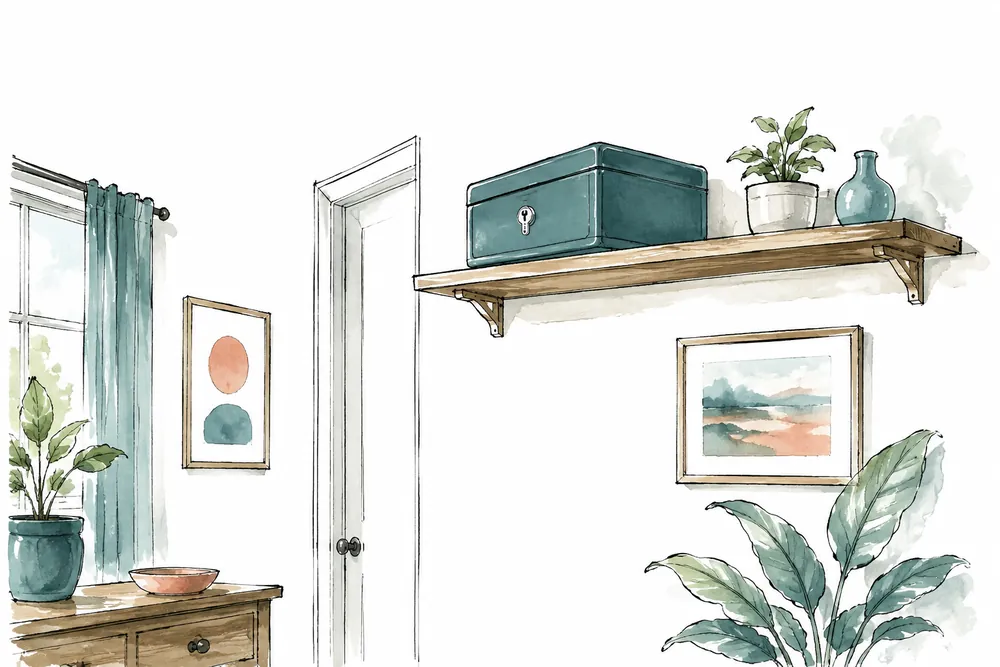
Health Canada recommends keeping cannabis locked away, out of sight and reach, in original packaging, and storing edibles separately from ordinary food and drink. It also recommends a secure cupboard or lockbox. Those practical storage measures are useful household precautions; Canadian packaging rules are not presented here as Indian law. Safe-storage guidance.
Choose one adult-controlled location and return the preparation there after handling it. Original packaging preserves the name, ingredients, batch details and expiry information that a clinician may need. Avoid transferring an edible preparation to a snack jar or leaving a bottle beside ordinary cooking ingredients.
A label that says adult use does not prevent a child from opening a drawer. A discreet carton is not necessarily child-resistant. A closed bag on a chair is not a locked storage space. These are distinct properties, and a household plan should not confuse them.
A room-by-room check
This is an original practical checklist, not a claim that every household has the same risks:
- Bedroom: check bedside tables, open drawers and bags left on the floor.
- Kitchen: keep preparations away from sweets, drinks, spices and food containers that other people use.
- Living room: check coffee tables, sofa pockets and visitor bags.
- Shared storage: make sure another adult will not mistake the preparation for a general household supplement.
- After use: close the original container and return it to locked storage immediately.
- When discarding packaging: check that no accessible contents remain and ask a pharmacist about appropriate disposal.
Include other adults in the plan
Children may encounter a preparation in a relative's home, a visitor's bag or a grandparent's room. Health Canada's child-poisoning guidance encourages conversations with family, friends and caregivers about safe storage. A simple question about where medicines and cannabis preparations are kept can identify a problem before an exposure occurs.
In a shared home, agree on who holds the key and who knows the emergency plan. If a child is visiting, do the check before they arrive. If a caregiver changes, hand over the storage information explicitly rather than assuming it is obvious.
Careful storage also protects adults with memory difficulties or visual impairment. The aim is to prevent mistaken access, not to make anyone feel blamed. A household routine should remain easy to follow under ordinary distraction.
What can a concerning reaction look like?
The CDC describes severe cannabis reactions that can include marked confusion, panic, paranoia, rapid heart rate, hallucinations and severe nausea or vomiting. These signs are not specific enough to diagnose the cause at home. Other substances or an unrelated illness may also be involved. CDC cannabis questions and answers.
In children, possible poisoning can present with unusual drowsiness, unsteadiness, confusion or slowed breathing. Serious cases can require hospital treatment. Do not wait for a child to describe feeling intoxicated; a young child may be unable to explain what happened.
Keep the amount and ingredients uncertain if you do not know them. Guessing that only a little was involved can falsely reassure everyone. A clinician can work with an honest account of what might be missing from a container.
What to do after a possible accidental exposure
Get medical advice immediately when poisoning is suspected. For severe symptoms, contact emergency services. The NHS poisoning guidance advises against inducing vomiting or giving food or drink while awaiting help. It also recommends bringing the suspected substance or its packaging if possible. Its UK telephone numbers do not apply in India.
- Prevent further access. Move the remaining preparation away from others without delaying care.
- Seek the right help. In an emergency in India, call 112. Otherwise contact a medical service promptly for suspected exposure.
- Explain what you know. Give the person's age, symptoms, possible substance, approximate timing and any other medicines involved.
- Keep the package available. A label photograph may help if the physical package cannot travel with the person.
- Follow professional instructions. Do not try internet remedies or assume someone should simply sleep it off.
The Indian Emergency Response Support System handles requests for emergency assistance. If you are impaired, do not drive yourself or someone else to care. Arrange an ambulance or transport with an unimpaired driver as appropriate.
Storage temperature and expiry are separate questions
Preventing access and preserving a formulation are different tasks. Follow the specific label's temperature, light and expiry instructions. Do not assume every oil needs refrigeration or that all preparations remain suitable for the same period after opening.
Record the opening date if the label gives an in-use period. If the label is damaged, the container has leaked or the storage history is uncertain, ask the pharmacist or manufacturer for clarification before further use. Colour or smell alone cannot replace the original information. The site's existing storage article supplies related context; the exact label still takes priority.
Frequently asked questions
Is keeping a preparation on a high shelf enough?
Height alone is not the same as restricted access. Public-health guidance recommends locked storage that is also out of sight and reach.
Should I wait for symptoms after a child may have swallowed it?
No. Seek prompt professional advice after a suspected ingestion. Delayed effects make waiting for obvious symptoms an unreliable approach.
Does plain packaging mean child-resistant packaging?
No. Plain appearance describes design. Resistance to opening describes a different property. Do not substitute one claim for the other.
Can I give a home remedy to reverse the effects?
Do not rely on a home remedy or induce vomiting. Follow the advice of a medical professional or emergency dispatcher.
What about driving later?
Do not treat a household observation period as clearance to drive. See the separate driving and impairment article.
From Kushiva
Discreet, plain packaging. Clear labels.
Every order ships in plain packaging with the format, strength and batch printed on the pack, so the person storing it knows what it is.