



The most common thing said to someone with migraine is that everyone gets headaches. It is meant kindly and it is completely wrong, and the misunderstanding is the reason a quarter of Indian adults live with something they have never had properly assessed.
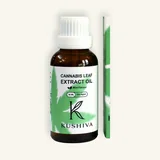
Kushiva makes cannabis leaf extract under India’s AYUSH framework. Whether it suits you is a question for your doctor.See the range
Migraine is not a severe headache. It is a neurological event in which the headache is one symptom among several, and sometimes not even the worst one. This article is entirely about migraine - what is happening in the brain, why light and sound become unbearable, why the painkillers you are taking may be making it worse, and what the research says about cannabis for this specific condition.
This article is educational and is not medical advice. Vijaya (cannabis leaf extract) is a prescription-regulated ingredient in India and should only be used under the guidance of a registered medical practitioner. A sudden, severe, or unusual headache - especially with fever, confusion, weakness, or after a head injury - needs emergency assessment, not a wellness article.
Key Takeaways
- Migraine is a brain event with four phases. The headache is phase three, and many people miss the first two entirely.
- Indian population studies put migraine prevalence around 25%, higher than the global figure, and markedly higher in women than men.
- Many things people call triggers - chocolate cravings, neck stiffness, yawning - are actually early symptoms of an attack that has already started.
- Taking acute painkillers more than about 10 to 15 days a month can cause medication overuse headache, which feels like worsening migraine and is caused by the treatment.
- A large real-time app study found inhaled cannabis roughly halved self-reported migraine severity, but the effect shrank over time as doses rose.
Quick Answer
Migraine is a genetic, neurological condition in which the brain is unusually sensitive to change, and periodically responds with a cascade that produces head pain, nausea, and extreme sensitivity to light and sound. It is treatable, both for individual attacks and preventively. Evidence for cannabis comes mainly from large observational data rather than controlled trials, and it points to meaningful short-term relief alongside a real tolerance problem.
What is actually happening
The old explanation was that blood vessels in the head swell up. That turned out to be a consequence rather than a cause, and the current understanding is more interesting.
A migraine brain is, in effect, poorly buffered against change. Most brains absorb fluctuation - a skipped meal, a bad night, a hormonal shift, a change in weather, a stressful week ending - without incident. A migraine brain has a lower threshold for that fluctuation, and when the threshold is crossed, a self-sustaining cascade begins.
Part of that cascade involves the trigeminal nerve, which supplies sensation to the face and the coverings of the brain. When it is activated it releases inflammatory chemicals around blood vessels in the head. This is why the pain is so often one-sided and throbbing - it follows the branches of that nerve and pulses with the blood flow beneath it.
The same activation explains the symptoms people find hardest to describe. Light hurts because the visual pathway is temporarily wired into the pain system. Sound hurts for the same reason. Ordinary smells become nauseating. Skin on the scalp and face can become painful to touch, so that brushing your hair or wearing spectacles is unbearable. None of this is sensitivity in the emotional sense. The volume control on incoming sensation has genuinely been turned up.
The four phases
Recognising these is what turns migraine from something that ambushes you into something you can sometimes get ahead of.

1. Prodrome, hours to two days before. Yawning, unusual tiredness or unusual energy, neck stiffness, mood changes, food cravings, needing to urinate frequently, difficulty finding words. Most people never connect these to migraine. They are the most reliable early warning you have.
2. Aura, about 20 to 60 minutes before the pain, in roughly a third of people. Most often visual: a shimmering blind spot, zigzag lines, an expanding arc of flickering light. It can also be tingling spreading up an arm, or difficulty speaking. Aura is a wave of altered electrical activity moving slowly across the surface of the brain, which is why it spreads and then passes rather than appearing all at once.
3. The attack itself, four to seventy-two hours untreated. Head pain, often but not always one-sided, usually throbbing, typically worse with movement. Nausea and vomiting. Light, sound and smell sensitivity. Most people want darkness, silence and stillness, and that is a symptom rather than a preference.
4. Postdrome, up to a day afterwards. The "migraine hangover". Drained, foggy, slow, sometimes unexpectedly euphoric. People often return to work in this phase and cannot understand why they are performing badly.
Triggers, and the trigger trap
The standard list is real: skipped meals, dehydration, disrupted sleep including too much sleep, hormonal changes around menstruation, alcohol, bright or flickering light, strong smells, and the let-down period after stress rather than the stress itself.
But there is a trap worth knowing about. Some famous triggers are almost certainly not triggers at all. Craving chocolate before an attack is a documented prodrome symptom - the brain has already begun the cascade and is producing a craving. People then eat the chocolate, get the migraine, and blame the chocolate for decades. The same logic applies to neck stiffness, which is frequently blamed as a cause when it is an early symptom.
This is why a diary beats a theory. Recording what happened in the 48 hours before each attack, kept for a couple of months, tends to overturn at least one belief people were confident about.
How common is migraine in India
More common than most people assume, and more common here than globally.

Population-based work in Karnataka found a one-year migraine prevalence of about 25%, against a global figure closer to 15%, with attacks occurring on average around 28 days a year - but in 38% of cases on three or more days every month (The Journal of Headache and Pain, 2014). Prevalence is roughly twice as high in women as in men, and peak disability falls in the early thirties, which is exactly the period when career and family demands are heaviest (The Journal of Headache and Pain, 2025).
That combination - very common, peaks in the most productive years, rarely formally diagnosed - is why migraine carries an economic cost in India measured in tens of thousands of crores.
The painkiller problem
This section matters more in India than almost anywhere, because combination headache tablets are widely available without much conversation.
If you take acute painkillers for headache on more than about 10 to 15 days a month, for three months or more, you can develop medication overuse headache. The brain adapts to the constant presence of the drug, and between doses you get a headache caused by that adaptation. It feels exactly like your migraine getting worse, so the natural response is to take more, which deepens the problem.
The way out is to stop or drastically reduce the overused medication, usually with medical support, and it involves a few genuinely unpleasant weeks before improvement. The important point is that if your headaches have crept from occasional to near-daily while your painkiller use crept up alongside, the treatment may now be part of the illness. That is a conversation for a doctor, not a reason for self-blame.
Preventive treatment exists precisely to avoid this. If you are having migraine on four or more days a month, prevention rather than more rescue medication is what guidelines point to.
What the research says about cannabis and migraine
The honest headline is that the evidence here is weaker in type than for nerve pain, because it is largely observational. There is no large randomised controlled trial of cannabis for migraine of the kind that exists for standard preventive drugs.
What does exist is unusually large real-world data. Researchers analysed app entries in which people recorded headache severity immediately before and after using cannabis - more than 1,300 people across over 12,200 sessions for headache, and 653 people across over 7,400 sessions for migraine specifically. Self-reported headache severity fell by 47.3% and migraine severity by 49.6%, with the great majority of users reporting some reduction (The Journal of Pain, 2019).
Roughly halving the severity of an attack is a substantial claim, so the limitations deserve equal billing. There was no placebo group, and people who choose to use cannabis and log it in an app expect it to work - expectation alone produces large effects in headache research. The measurements were self-reported. And there is no way to know how these people's attacks would have progressed untreated.
The finding most worth carrying away is less flattering. The effect diminished over time, and doses increased over time, which points to tolerance developing. Given everything above about medication overuse headache, a treatment that requires steadily more of itself deserves caution in this condition specifically. That is not a reason to dismiss it. It is a reason to agree in advance with a doctor how often is too often.
If you are considering it
- Get the diagnosis right first. Migraine, tension-type headache, cluster headache and sinus problems are treated differently, and self-diagnosis is unreliable. Many people told they have "sinus headache" have migraine.
- Count your painkiller days for one month. If it is above ten, that is the first thing to address, before adding anything new.
- Ask about prevention if you have four or more migraine days a month. Reducing attack frequency beats treating attacks better.
- Agree a frequency limit up front. The tolerance signal in the data is the reason.
- Keep the diary. Whatever you try, without a record you will not be able to tell whether it worked.
Migraine responds badly to being minimised and quite well to being taken seriously. If yours is costing you days each month, that is not something to manage privately with whatever tablet is in the drawer - it is a treatable neurological condition, and it deserves an actual assessment.
If you are weighing this up, the useful first step is an assessment rather than a product. Every Vijaya order at Kushiva goes through a prescription and medical-review step before dispatch, so you can see the lab-tested range and begin with a doctor review.
If a doctor does advise trying it, onset speed is the deciding factor for an attack that has already started: the 10 ml oil acts sublingually in roughly 15 to 45 minutes, while gummies take considerably longer. See oil vs gummies.
About Kushiva
What we make, and how it is sold.
Kushiva sells cannabis leaf extract in four formats under India’s AYUSH framework. Strength is stated as a number on the approved label, every batch has a certificate of analysis, and every order is reviewed by an in-house doctor before dispatch. Any decision about whether a product suits you belongs with your own doctor.