Pick up a cannabis gummy marketed for sleep and there is a fair chance the label names a second ingredient next to CBD: CBN. Shops call it the sleep cannabinoid. The research behind that name is small, and it is more mixed than the name suggests.
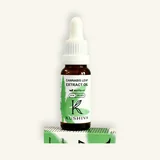
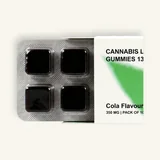
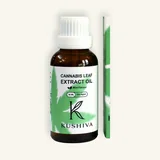
Kushiva sells cannabis leaf extract gummies, so you should know who wrote this. None of our products is sold as a CBN product or on a CBN sleep claim.See the range
This piece covers what CBN is, what a 2026 trial in people with diagnosed insomnia found, why an earlier and larger study gets quoted more confidently than it should, and how to read a gummy label before you apply any of this to a product.
This article is general information, not medical advice. Vijaya (cannabis leaf extract) is prescription-regulated in India and should only be used under the supervision of a registered medical practitioner. Study doses below describe the studies. They are not dosing guidance.
Key takeaways
- The 2026 trial missed its main target. In 20 adults with insomnia, neither 30 mg nor 300 mg of CBN reduced time spent awake after first falling asleep.[1]
- The high dose did shift some measures. At 300 mg, people fell asleep faster and rated their sleep better. Each dose was given on a single night.[1]
- The larger 2023 study was industry-run. Its main sleep-quality result was not statistically significant, and adding CBD did not help.[3]
- A lab report shows what is in a product. It says nothing about whether the product will help you sleep.
Quick answer
CBN has not been shown to treat insomnia. The best-designed trial so far gave single doses to 20 people with diagnosed insomnia and found no change in its main measure, time awake during the night, although the higher dose shortened the time it took to fall asleep.[1] An earlier study of 293 poor sleepers, run by cannabis-company researchers, found fewer night-time awakenings but no significant effect on its main sleep-quality score.[3] Both are early results. For long-running insomnia, the first-line treatment is still CBT-I, a structured talking therapy.[4]
What is CBN?
CBN is short for cannabinol. It forms when THC breaks down with exposure to air and heat, which is why older cannabis tends to hold more of it. Despite the similar name, it is a different compound from CBD. If you are still sorting out those two, our CBD vs THC explainer covers them.
Until recently, almost nobody had tested CBN on its own in people. The Sydney team behind the 2026 trial said as much when they published their plan in 2023: the claims about CBN and sleep rested on anecdote and animal work.[2] Testing it alone is the only way to learn what it does, since a product with several cannabinoids in it cannot tell you which one is responsible for an effect.
What the 2026 trial found
Researchers at the Woolcock Institute and the University of Sydney recruited 20 adults, aged 25 to 65, with doctor-diagnosed insomnia disorder. On three separate nights, two weeks apart, each person took a liquid dose of 30 mg CBN, 300 mg CBN or a placebo, without knowing which. They slept in a sleep laboratory wired to overnight monitoring.[1]
The question the trial was built to answer was whether CBN cut the minutes people lay awake after first falling asleep. It did not, at either dose. The 300 mg dose shortened the time to fall asleep and people rated their sleep as better that night. It also slightly reduced brief arousals picked up on the brain recordings.[1]
Some limits are worth knowing before you repeat any of this:
- Each dose was given once. A single night tells you nothing about what happens with regular use.
- The positive findings were secondary measures, which carry less weight than the main outcome.
- The trial recorded 247 mild-to-moderate adverse events across the three study nights, placebo included.[1]
The authors' own conclusion was that larger and longer trials are needed. You can read the abstract on PubMed.
Why some headlines sound more certain
Sleep is not one measurement. A study can move one part of it and leave the rest where it was, and a headline usually picks the part that moved.
The study behind most "CBN improves sleep" claims ran in 2022 and analysed 293 adults who rated their own sleep as poor. Participants took 20 mg of CBN, CBN combined with CBD at one of three amounts, or a placebo, for seven nights in a row. Compared with placebo, 20 mg of CBN reduced reported night-time awakenings and overall sleep disturbance. Its main outcome, sleep quality, fell short of statistical significance. There was no difference for time taken to fall asleep or time awake during the night, and adding CBD did not improve the result.[3]
All nine authors listed Canopy Growth or Wana Brands, both cannabis companies, as their affiliation.[3] That does not make the findings wrong. It is something to weigh when you read them.
Notice too that the two studies disagree on the detail. The 2026 trial saw faster sleep onset and no change in time awake. The 2023 study saw fewer awakenings and no change in sleep onset. If your problem is lying awake for an hour before you drop off, a finding about waking less often may not apply to you at all.
Reading a gummy label with this in mind

Before you connect a study to a product, check that the ingredient and the amount actually match. A gummy described as containing "CBN" might hold a few milligrams, while the trials above tested 20 mg to 300 mg.
Extract weight is also not cannabinoid weight. A label that gives milligrams of cannabis leaf extract has not told you how many milligrams of CBN, CBD or THC are in each piece. Ask the seller for that breakdown rather than assuming the biggest number on the pack describes strength.
When you get a certificate of analysis, match its batch number to the one printed on your pack, and check the units, since a result per gram is not the same as an amount per gummy. Our guide on how to read a cannabis COA goes through a report line by line.
For our own range: every Kushiva batch has a certificate of analysis, and every order is reviewed by a doctor before it is dispatched. What our certificate covers, and what it does not, is set out on the lab results page. The gummies themselves are described on the product page, and the gummies buyer guide compares formats more generally.
What to bring to a consultation
"I sleep badly" gives a doctor very little to work with. Be specific: what time you go to bed, roughly how long it takes to fall asleep, how often you wake and what wakes you, and how you feel the next day. Bring the label of anything you are considering, plus a list of your current medicines and supplements.
If the problem has lasted months, ask about cognitive behavioural therapy for insomnia (CBT-I). It is usually recommended as the first treatment for long-term insomnia and works on sleep habits, time in bed and worry about sleep. It can be done in person, by phone or online.[4]
If you and your doctor still decide to try a product, agree beforehand on what "better" means and when you will review it. Falling asleep sooner, waking less and feeling sharper the next morning are three different results, and the studies above suggest a product may move one without the others. In India, cannabis leaf extract is prescription-regulated; our piece on getting a cannabis prescription in India explains how that works.
Frequently asked questions
Is CBN proven to help with sleep?
No. The one trial in people with diagnosed insomnia found no change in its main measure, and the larger earlier study missed its main outcome too. Some secondary measures improved in each.
Is CBN the same as CBD?
No. CBN forms as THC breaks down. CBD is a separate compound made by the plant.
Does adding CBD make CBN work better for sleep?
In the 2023 study it did not. Combinations with 10 mg, 20 mg or 100 mg of CBD did no better than CBN alone.
Do Kushiva gummies contain CBN for sleep?
Our gummies are a cannabis leaf extract product and are not sold as a CBN product or as a sleep treatment. The batch certificate of analysis describes what each batch contains.
What is the first-line treatment for long-term insomnia?
CBT-I, a structured therapy for sleep habits and sleep-related worry, is usually recommended first.
The bottom line
CBN may turn out to be useful for some part of sleep, but the evidence so far is two studies that each missed their main outcome and found smaller effects elsewhere. We will update this article when larger, longer trials report. In the meantime, a clear description of your sleep problem will do more for you in a consultation than any cannabinoid on a label, and our longer review of Vijaya for sleep and insomnia covers the wider evidence. For a head-to-head on a common alternative, see cannabis gummies vs melatonin.
Sources
- Lavender IG, Marshall NS, McCartney D, et al. Cannabinol for acute treatment of insomnia disorder in a randomized placebo-controlled crossover trial. Journal of Sleep Research. 2026;35(4):e70284. doi:10.1111/jsr.70284. PubMed 41698831
- Lavender I, McCartney D, Marshall N, et al. Cannabinol (CBN; 30 and 300 mg) effects on sleep and next-day function in insomnia disorder ('CUPID' study): protocol for a randomised, double-blind, placebo-controlled, cross-over, three-arm, proof-of-concept trial. BMJ Open. 2023;13(8):e071148. doi:10.1136/bmjopen-2022-071148. PubMed 37612115
- Bonn-Miller MO, Feldner MT, Bynion TM, et al. A double-blind, randomized, placebo-controlled study of the safety and effects of CBN with and without CBD on sleep quality. Experimental and Clinical Psychopharmacology. 2024;32(3):277-284. doi:10.1037/pha0000682. PubMed 37796540
- National Heart, Lung, and Blood Institute. Insomnia: treatment. nhlbi.nih.gov
From Kushiva
AYUSH-licensed, doctor-reviewed.
Four cannabis leaf extract products with every price listed and a certificate of analysis for every batch. Our in-house doctor reviews each order before dispatch, at no extra charge.
This article is general information, not medical advice. Vijaya (cannabis leaf extract) is prescription-regulated in India and should only be used under the supervision of a registered medical practitioner. Study doses describe the studies and are not dosing guidance. Persistent sleep problems deserve a diagnosis before they get a product.