

A prescription, a familiar route and the feeling that you are fine do not measure driving ability. The important question is whether attention, judgement and coordination are affected.
Kushiva makes AYUSH-licensed cannabis leaf extract in four formats, from Rs 1,199, with a certificate of analysis behind every batch.See the range
This article is general information, not medical advice. Vijaya (cannabis leaf extract) is prescription-regulated in India and should be used only under the supervision of a registered medical practitioner. Nothing here sets a dose: how much is right for you depends on your prescription, the strength of the product, your health condition, how your body responds, and any other medicines you take. That is a conversation with your doctor, not a website.
Do not drive or operate machinery while affected by cannabis or another impairing substance. This article gives no universal waiting period, fitness-to-drive clearance or individual legal advice.
Key takeaways
- Do not drive while impaired. That is the whole rule, and it does not have an exception for a prescription.
- Feeling fine is not a measurement. Self-assessment is the first thing impairment degrades.
- Swallowed formats are delayed. The peak can arrive hours later, long after you decided you were fine.
- No fixed waiting time is safe for everyone. Anyone quoting a universal number is guessing.
- Arrange the lift first. Decide about transport before the dose, not after it.
Quick answer
Can you drive after taking vijaya? Do not drive while impaired. Cannabis preparations containing THC can affect skills needed for driving, and oral effects can be delayed. A generic waiting time, prescription or self-check cannot guarantee that you are safe or legally fit to drive. Arrange alternative transport when impairment is possible.
Driving requires more than staying awake
The CDC identifies slower reactions, impaired coordination and altered perception as concerns with cannabis and driving. A driver must notice hazards, divide attention and make decisions while controlling a moving vehicle. Being awake and able to hold a conversation does not demonstrate all of those abilities. CDC driving guidance.
Vijaya is not a standard unit of exposure. If a preparation contains THC, its effects depend on more than the product's name. The label, actual cannabinoid content, route, other substances and individual response matter. A quantity of leaf extract should not be read as the same quantity of THC.
If the composition is unclear, that uncertainty does not establish that the preparation is non-impairing. Ask the clinician or pharmacist to review the actual information. The certificate-of-analysis guide explains why identity, quantity and reporting limits need to be distinguished.
A driving study shows the limits of self-confidence
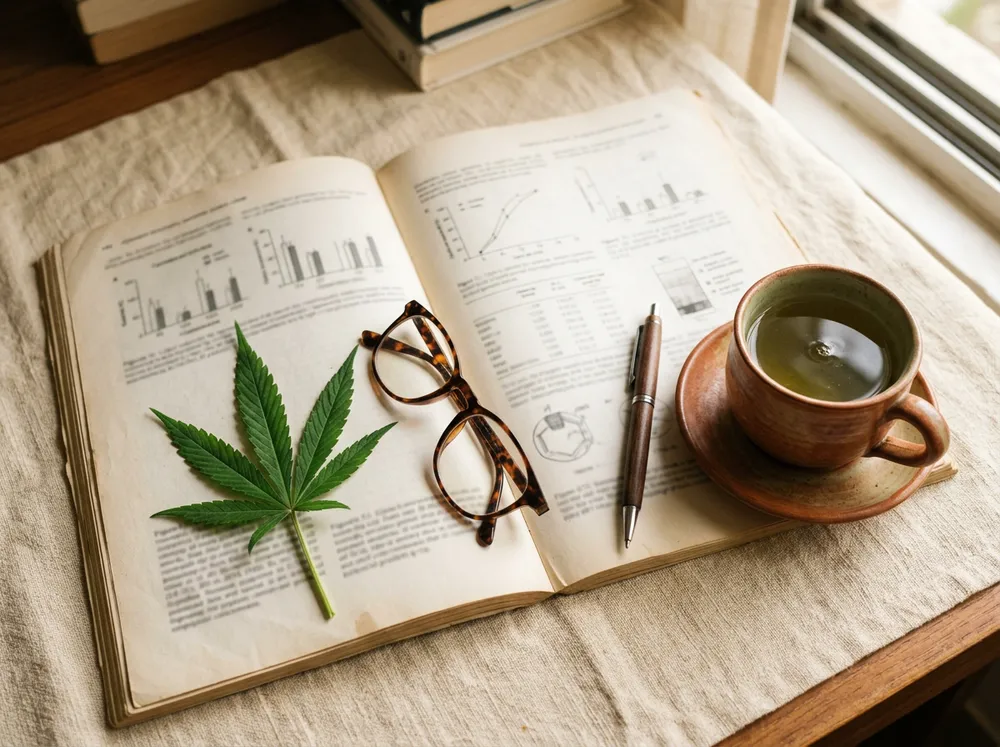
In a randomized trial of 191 regular cannabis users, researchers measured driving-simulator performance after smoked cannabis or placebo. THC groups showed worse performance at early assessments. More participants later said they were ready to drive even when performance had not improved from the initial post-smoking assessment. Marcotte and colleagues, JAMA Psychiatry, 2022.
The trial does not supply a waiting rule for oils, edibles or a particular Indian preparation. It involved smoking, a defined study population and a simulator. Its useful lesson here is narrower: subjective readiness can diverge from measured performance.
That is why statements such as I use it regularly, I only feel relaxed or I know this road are not reliable clearance tests. Experience with a preparation may inform a clinical discussion, but it does not replace a safety assessment.
Why a fixed waiting period is the wrong promise
Health Canada's lower-risk guidance notes that ingestion delays effects and that cannabis and alcohol together increase collision risk. Public-health timing advice is a risk-reduction measure for populations, not a guarantee for every driver.
Timing can vary with the route and preparation, amount, repeated exposure, other substances and individual factors. A fixed rule also cannot account for a person who still feels drowsy after the expected window or who has not slept adequately.
| Question | What it concerns | What it cannot establish alone |
|---|---|---|
| When might effects begin? | Onset | When someone is safe to drive |
| How long might effects last? | A variable period of effects | A guaranteed end of impairment |
| Can a test detect cannabis? | Presence of a substance or metabolite | An exact measure of current driving ability |
| Was it prescribed? | Clinical context | Fitness to operate a vehicle |
The CDC also cautions that connecting a THC concentration with impairment for an individual is difficult. Drug detection and impairment are related topics, but they are not interchangeable measurements. This article does not advise on avoiding tests or enforcement.
Oil and gummies do not share one predictable clock
Do not assume that something called oil is always rapid or that something called a gummy has one fixed delay. Route and formulation need to be known. In particular, swallowed preparations can produce delayed effects, so an uneventful initial period should not be treated as permission to leave in a vehicle.
For a prescribed preparation, discuss the transport implications before use with the treating clinician. Ask specifically about commuting, machinery and the possibility of residual effects. Do not convert general onset information into an individualized dosing timetable.
What does a prescription change in India?
The Motor Vehicles Act entry on India Code identifies Section 185 as dealing with driving under the influence of alcohol or drugs and Section 186 with driving when mentally or physically unfit. These are distinct from questions about the authorization or supply of a preparation.
A document relating to treatment should not be interpreted as evidence that a person can safely drive. For an individual legal question, use current official law and qualified advice. This article does not claim a prescription exemption, a state-specific enforcement rule, a permissible THC level or a particular penalty.
The site's cannabis-law information page provides broader context, but it is not a substitute for official sources. The immediate safety decision remains to avoid driving while affected.
Alcohol, other medicines and lack of sleep need separate attention
Do not assume that a small amount of alcohol is irrelevant. Combining impairing substances can increase risk. Other medicines may also affect alertness, and changing a prescription can change the circumstances even when the cannabis preparation is unchanged.
Bring all medicines and supplements to a professional review rather than considering each item in isolation. The medication-review article describes how to prepare that information. A night-shift worker should also explain the actual work and commuting schedule; the end of a shift is not proof that someone is rested or fit to drive.
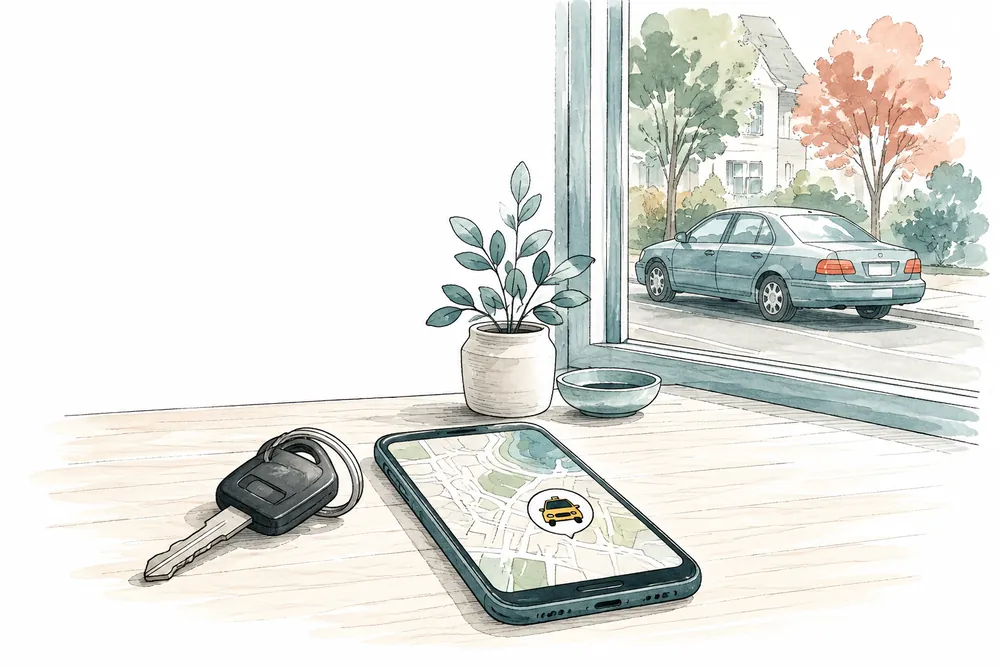
Arrange transport before judgement might be affected
The following is an original practical planning checklist, not a clinical clearance test:
- Identify transport responsibilities. Include school pickups, errands, emergency family trips and work travel, not just the main commute.
- Arrange an unimpaired option. A trusted driver, taxi or other suitable transport should be available without requiring a last-minute argument about whether you feel fine.
- Discuss work requirements. Tell the treating clinician if you operate vehicles or machinery. Ask an appropriate occupational-health professional about safety-critical duties.
- Avoid trial runs. Driving slowly around the block is not a valid test of readiness.
- Change the plan if symptoms occur. Drowsiness, dizziness, confusion or other impairment means the transport arrangement needs to change, not that you should try harder to concentrate.
If an emergency occurs, contact emergency services rather than driving while impaired. In India, 112 is the national emergency response number.
Frequently asked questions
Can I ride a scooter instead?
A two-wheeler still requires judgement, attention and coordination. It is not a workaround for impaired driving.
Can I drive the next morning?
A calendar change does not measure impairment. Residual symptoms, poor sleep and other medicines still matter. Do not drive while affected; ask the clinician about your specific circumstances.
Does tolerance make driving safe?
No such guarantee follows from regular use. Familiarity and subjective confidence are not the same as unimpaired performance.
Is CBD-labelled oil automatically non-impairing?
A product name is not a laboratory result or a fitness assessment. Review the composition and potential effects with a qualified professional.
Can I use a negative drug test as permission to drive?
No. A test result is not a complete assessment of alertness, coordination, judgement or the effects of other substances.
How many hours should I wait?
This article cannot give a number that guarantees safety. Follow individual clinical advice, applicable law and the principle that you must not drive while affected.
From Kushiva
Doctor-reviewed before dispatch.
An in-house doctor reviews every order. If driving is part of your job or your day, that is worth raising with them.