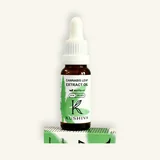

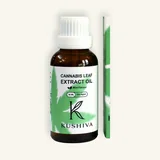

If your employer runs drug screening, this is the question you need answered before you order, not after. It gets asked quietly and it rarely gets a straight answer, because the honest answer is not the one a shop wants to give. Here it is anyway.
Kushiva makes AYUSH-licensed cannabis leaf extract in four formats, from ₹1,199, with a certificate of analysis behind every batch.See the range
In this guide: what a workplace screen actually measures, why a legal prescription does not change the result, how long detection windows really run, and what to do about it if you work somewhere that tests.
This article is general information, not medical, legal or employment advice. Vijaya (cannabis leaf extract) is prescription-regulated in India and should only be used under the supervision of a registered medical practitioner. No dose is stated anywhere here: how much to take depends on your prescription, the strength of the product, your health conditions, your response and your other medicines. That decision belongs to a doctor, not to a website. Nothing here is guidance on avoiding or defeating a test.
At a glance
- Yes, it can show up. Full-spectrum cannabis leaf extract contains THC, and THC is what a standard screen looks for.
- A screen detects a molecule, not a legal status. Having a valid prescription does not change what the strip reads.
- Detection windows are wide and unpredictable. THC is fat-soluble, so regular use can stay detectable for weeks after the last dose.
- The workable answer is disclosure before the test, not timing tricks. Keep your prescription and invoice.
- If you are in a safety-critical role, raise it with your doctor and your employer before you start, not afterwards.
Quick answer
Yes. Cannabis leaf extract can produce a positive result on a standard workplace drug test in India, and you should assume it will. These are full-spectrum extracts, meaning THC is present by design, and the common urine screen is looking for a THC breakdown product. It has no way of telling whether the THC came from a licensed Ayurvedic formulation prescribed by a registered doctor or from something bought on a street corner. If your job tests, treat that as a decision you need to make openly rather than a risk you can time around.
What the test is actually measuring
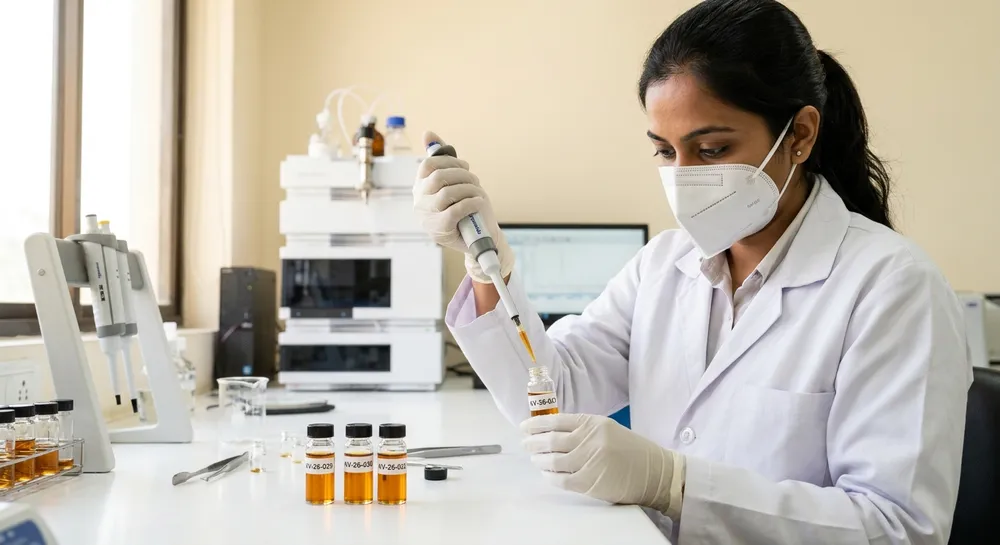
The usual workplace screen is a urine immunoassay, and it does not look for THC itself. It looks for THC-COOH, an inactive metabolite the body produces while clearing THC. That matters for two reasons.
First, the metabolite hangs around much longer than any effect does. You can be entirely clear-headed, days past your last dose, and still test positive. The test is not a measure of impairment and was never designed as one.
Second, the widely used screening threshold is 50 nanograms per millilitre, with positives usually confirmed by a more precise laboratory method at a lower cutoff. Those numbers are set low enough that meaningful amounts of THC are difficult to hide and high enough that trace exposure is not supposed to trip them.
Why a prescription does not fix it
This is the part people find hardest to accept, and it is worth being blunt about. A prescription makes your use lawful. It does not make the molecule invisible.
An employer's drug policy is a contractual matter, not a criminal one. Your company can hold a policy that a positive result has consequences regardless of the reason for it, and in safety-critical work that position is often reasonable. Whether your prescription changes the outcome depends entirely on your employment terms and how your organisation handles medically explained positives. That is a conversation with your HR function, ideally in advance and in writing.
What a prescription does give you is standing. A documented, licensed, doctor-reviewed purchase with an invoice and a batch report behind it is a completely different conversation from a positive result with no explanation. That is the practical reason to buy through a route that produces paperwork at all.
How long it stays detectable
Honestly: longer than most people expect, and with more variation between individuals than any table can capture. THC is stored in fat tissue and released slowly, so the window depends on how often you use it, how much, your body composition, your metabolism and how hydrated you are on the day.
The broad pattern reported in the literature runs roughly like this. A single occasional use is often detectable for a few days. Use several times a week can run one to two weeks. Daily use over a long period has been reported to remain detectable for a month or more after stopping. Blood and saliva windows are much shorter than urine; hair testing is far longer.
Notice what that range means in practice. There is no reliable number of days you can count and be safe. Anybody offering you one is guessing.
Who this actually affects in India
There is no single national workplace drug-testing law covering ordinary private employment in India, so in most cases whether you are tested comes down to your employment contract and your company's policy. A few situations come up repeatedly.
- Multinational and IT employers. Many run pre-employment or random screening imported from group-level policy. Common across Bengaluru, Hyderabad, Chennai and Pune.
- Transport, aviation, shipping, rail. Safety-critical roles carry their own regulatory testing regimes and the tolerance is effectively zero.
- Manufacturing and heavy plant. Machinery operation policies frequently include testing after any incident.
- Overseas employment and visas. Some destination countries screen as part of medical clearance, under their rules, not India's.
- Sport. Anti-doping rules are their own separate system with their own list. Do not assume anything here carries across.
What to do instead of timing it
The useful moves are all boring and all involve telling the truth earlier than feels comfortable.
- Tell the prescribing doctor about the testing before you start. It is a relevant clinical fact and it may change what they recommend, including recommending against it.
- Read your own drug policy. Most people have never opened it. Find out whether it has a medical-declaration route.
- Declare in advance where a route exists. A declaration made before a test reads very differently from an explanation offered after one.
- Keep the paperwork. Prescription, GST invoice, and the batch certificate of analysis from our lab results page.
- Do not attempt to defeat the test. Detected adulteration is usually treated more seriously than the positive result it was meant to hide.

The driving point, while we are here
Separate from employment, and more serious. Do not drive after taking a cannabis extract, and do not treat a negative feeling of impairment as evidence you are fine. We set out the reasoning in cannabis extract safety in India. A roadside situation is not a place where a prescription resolves the question quickly.
Frequently asked questions
Will cannabis leaf extract show up on a drug test?
Assume yes. Full-spectrum extracts contain THC, and a standard urine screen looks for a THC metabolite. It cannot distinguish a prescribed licensed product from any other source of THC.
Does a valid prescription mean I will pass?
No. A prescription makes the use lawful, but the test result will still be positive. Whether that positive has consequences depends on your employer's policy, which is a contractual matter.
How long does it stay detectable?
It varies widely with frequency of use, body composition and metabolism. Reported urine windows range from a few days for occasional use to a month or more after long-term daily use. No fixed number is reliable.
Are saliva and blood tests different?
Yes. Both have substantially shorter detection windows than urine. Hair testing has a much longer one. Which method your employer uses changes the picture considerably.
Should I tell my employer?
If your workplace tests, disclosing in advance through whatever medical-declaration route your policy provides is almost always better than explaining a positive afterwards. Check your policy and speak to your prescribing doctor first.
Is there a version with no THC at all?
Full-spectrum leaf extract contains THC as part of what it is. Anybody selling you an Indian cannabis leaf extract while promising a guaranteed negative test result is making a claim they cannot support.
The bottom line
A drug screen is a chemistry test, not a legality test, and no prescription changes what it reads. If you work somewhere that tests, that is a real constraint and it deserves an honest conversation with your doctor and your employer before you order anything, not a search for a safe gap in the calendar. If it does not apply to you, it costs you nothing to know. Our range is listed here with prices and lab reports.
From Kushiva
Lab-tested, licensed, doctor-reviewed.
Four cannabis leaf extract products, every price listed, a certificate of analysis behind every batch. An in-house doctor reviews each order before dispatch, at no extra charge.
More from the Kushiva Journal
This article is general information, not medical, legal or employment advice. Vijaya (cannabis leaf extract) is prescription-regulated in India and should only be used under the supervision of a registered medical practitioner. No dose is stated anywhere here: how much to take depends on your prescription, the strength of the product, your health conditions, your response and your other medicines. That decision belongs to a doctor, not to a website. Nothing here is guidance on avoiding or defeating a test.