

Every product page in this category is happy to tell you what cannabis leaf extract might do for you. Far fewer are willing to sit down and go through what it might do to you. That is the more useful conversation, so let us have it.
Kushiva makes AYUSH-licensed cannabis leaf extract in four formats, from Rs 1,199, with a certificate of analysis behind every batch.See the range
This guide covers what controlled research actually reports about cannabis oil side effects, which ones show up most often, the liver question that gets misquoted in both directions, and the interaction problem that matters more than any of it.
This article is general information, not medical advice. Vijaya (cannabis leaf extract) is prescription-regulated in India and should be used only under the supervision of a registered medical practitioner. Nothing here sets a dose: how much is right for you depends on your prescription, the strength of the product, your health condition, how your body responds, and any other medicines you take. That is a conversation with your doctor, not a website.
Key takeaways
- The most commonly reported effects in trials are drowsiness, diarrhoea, appetite changes and dizziness. Unpleasant, usually mild, mostly dose-related.
- Most of the good safety data comes from very high-dose pharmaceutical CBD trials, not from leaf extract at prescription amounts. That cuts both ways, and we explain how.
- The liver signal is real but was concentrated in people also taking valproate, an anti-epileptic.
- The single most underrated risk is interaction with medicines you already take. Tell your doctor everything, including the supplements you think do not count.
Quick answer
The side effects most consistently reported in controlled cannabis and cannabinoid research are drowsiness, diarrhoea, changes in appetite, dry mouth and dizziness. Most are mild, most are dose-related, and most settle. Rarer but more serious signals include raised liver enzymes and interactions with other medicines. In India, Vijaya products are prescription-regulated precisely so that a doctor weighs those risks against your situation before you start, rather than after.
What the research actually measured, and why the dose matters
Here is the part most articles skip. The cleanest safety data on cannabinoids does not come from wellness products. It comes from trials of high-dose pharmaceutical CBD used to treat severe childhood epilepsy, at amounts far above anything in a wellness formulation.
A systematic review and meta-analysis of randomised trials in Neuropsychopharmacology pooled that evidence and found cannabidiol was associated with a higher likelihood of somnolence, or drowsiness (odds ratio 2.23), and of diarrhoea (odds ratio 2.61), compared with placebo.
So when you read "cannabis oil causes diarrhoea", the honest footnote is: at trial doses, measured against placebo, in a specific patient group. That does not mean the finding is irrelevant to you. It means the size of the risk at your amount is not the size of the risk in the study, and anyone who tells you the exact number is guessing.
The effects that come up most often
Across the research literature and product labelling, the recurring list is short and fairly boring:
- Drowsiness. The most consistent finding. Which is exactly why it deserves a paragraph on driving, and gets one in our cannabis extract safety guide.
- Digestive upset. Diarrhoea and stomach discomfort, often in the first days.
- Appetite and weight changes. In either direction.
- Dry mouth. Harmless, annoying, easily fixed with water.
- Dizziness or light-headedness. Particularly when standing up quickly.
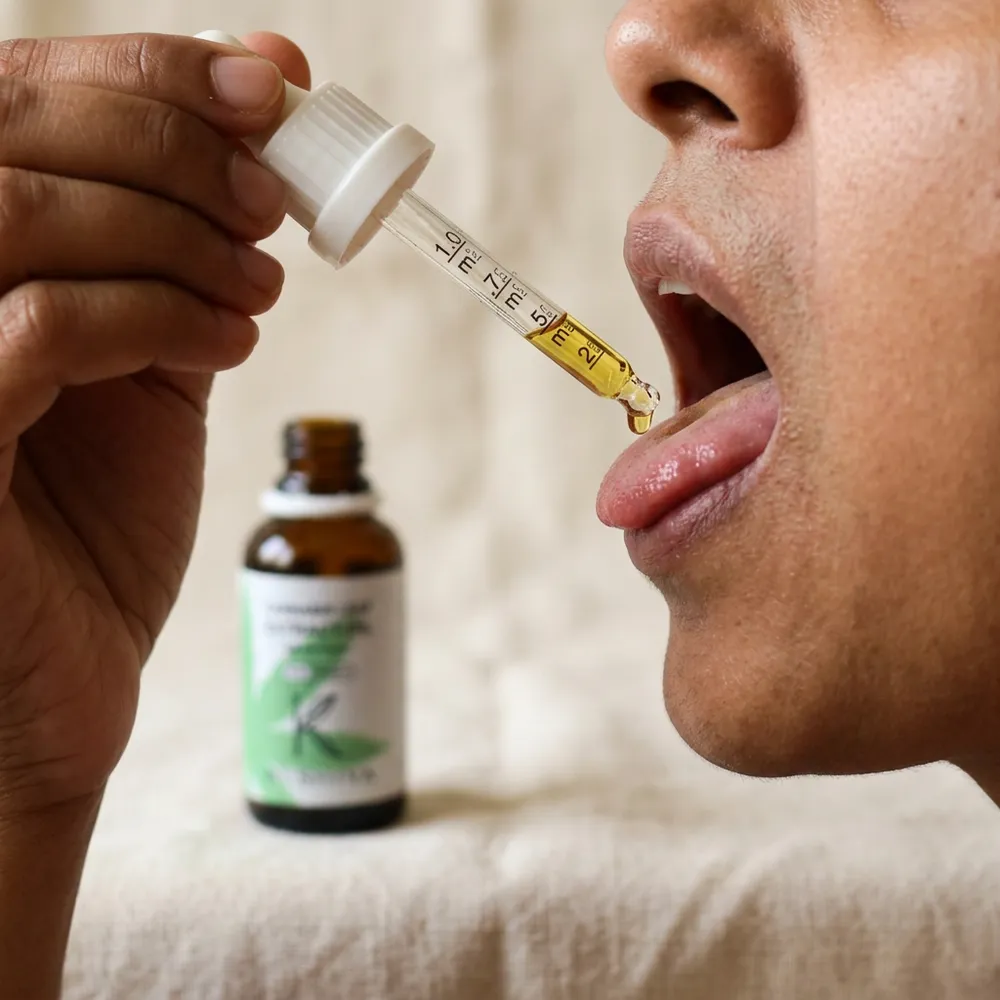
An honest note on the delayed-onset trap: with an edible format, effects arrive slowly, and the classic mistake is deciding nothing is happening and taking more. That is how a mild experience turns into an unpleasant one. We cover the timing in the cannabis gummies buyer guide.
The liver question, without the panic and without the hand-waving
Raised liver enzymes are the most serious signal in the cannabidiol literature, and it gets reported badly by everyone. The meta-analysis above found an elevated likelihood of serious adverse events involving abnormal liver function tests.
But the detail is what matters. The NIH LiverTox database records that in controlled trials, enzyme elevations above three times the upper limit of normal appeared in around 21 percent of patients who were also taking valproate, against roughly 3.5 percent of those who were not, and that no patient developed clinically apparent liver injury with jaundice.
Read that twice. The signal clustered in people on a specific other drug. That is not a reason to shrug, it is a reason to make sure your doctor has your full medicine list, which brings us to the genuinely important bit.
Interactions: the boring risk that actually matters
If you take one thing from this article, take this. Cannabinoids are processed by the same liver enzyme systems that handle a large share of common medicines. That means the meaningful question is rarely "is cannabis oil safe" in the abstract. It is "is it safe alongside the specific things already in your body".
Blood thinners, anti-epileptics, sedatives, some heart medicines and a long tail of others are worth flagging. So are the ones people forget to mention because they do not feel like medicines: herbal supplements, sleep aids, that one thing a relative recommended.
This is the whole reason Kushiva routes every order through a doctor review rather than letting you check out with a mystery box. You can read exactly how that works on how ordering works.
Who should be especially careful
Research and product labelling consistently flag the same groups: people who are pregnant or breastfeeding, people with liver conditions, people with a personal or family history of psychiatric conditions, people on the medicines above, and anyone under 18. "Be careful" here means "have the conversation before, not after".

What a lab report can and cannot tell you
A certificate of analysis tells you what is in the bottle: the cannabinoid content, and whether the batch is clear of contaminants. That matters for side effects, because a meaningful share of bad experiences in this market come from products whose actual contents did not match the label at all.
What a COA cannot tell you is how you will respond. Every batch we sell has one, published on the lab results page. It is a floor, not a guarantee.
Frequently asked questions
What are the most common side effects of cannabis oil?
Drowsiness, diarrhoea, changes in appetite, dry mouth and dizziness are the effects most consistently reported in controlled research. Most are mild and dose-related.
Does cannabis leaf extract damage the liver?
Controlled trials of high-dose cannabidiol recorded raised liver enzymes, but the effect clustered heavily in patients also taking valproate, and no clinically apparent liver injury with jaundice was reported. Anyone with a liver condition should raise it with their doctor before starting.
Can cannabis oil interact with my other medicines?
Yes, and this is the risk most worth taking seriously. Cannabinoids share liver enzyme pathways with many common medicines. Give your doctor a complete list, including herbal supplements.
How much cannabis oil should I take to avoid side effects?
We do not answer that, and you should be wary of any seller who does. The right amount depends on your prescription, the strength of the product, your condition, your response and your other medicines. It is set by the prescribing doctor.
Are side effects worse with oil or with gummies?
The format changes the timing rather than the list. Edibles act more slowly, which makes it easier to take more too soon. Our oil versus gummies comparison covers the trade-off.
The bottom line
Cannabis oil is not risk-free, and any brand claiming otherwise is selling you something other than information. The reported side effects are mostly mild and manageable; the two things genuinely worth your attention are drug interactions and being honest with your doctor about everything you take. Everything else is detail. If you want the product side of that conversation, our range is listed here with prices and lab reports.
From Kushiva
Lab-tested, licensed, doctor-reviewed.
Four cannabis leaf extract products, every price listed, every batch backed by a certificate of analysis. An in-house doctor reviews each order before it is dispatched, at no extra cost.
Related from the Kushiva Journal
This article is general information, not medical advice. Vijaya (cannabis leaf extract) is prescription-regulated in India and should be used only under the supervision of a registered medical practitioner. Nothing here sets a dose: how much is right for you depends on your prescription, the strength of the product, your health condition, how your body responds, and any other medicines you take. That is a conversation with your doctor, not a website.