Every year around Holi and Maha Shivratri, millions of Indians drink bhang openly and legally, while cannabis in most other forms stays firmly illegal. To an outsider that looks like a contradiction. It is not. Bhang and "weed" come from the same plant, but they are different parts of it, and Indian law treats those parts very differently.
This guide explains the real difference between bhang and weed: what part of the plant each comes from, why one is legal and the other is not, how their strength compares, and what that means for anyone curious about cannabis in India.
This article is general information, not legal or medical advice. Cannabis laws in India sit across central and state law and can change; rules also vary by state. For your specific situation, consult a qualified lawyer, and for any health use, a registered medical practitioner. Vijaya (cannabis leaf extract) is prescription-regulated in India and should only be used under medical supervision.
Key takeaways
- Bhang is made from the cannabis leaves; weed (ganja) is the flowering tops, and charas is the resin.
- India's NDPS Act bans the tops and the resin but excludes the leaves, which is why bhang can be legal and ganja is not.
- Bhang is generally milder than concentrated ganja or charas, though a bhang drink can still have a strong, slow, unpredictable effect.
- Legality still depends on your state, and none of this makes recreational ganja or charas legal anywhere in India.
Quick answer
Bhang and weed come from the same cannabis plant but different parts. Bhang is made from the leaves, which India's NDPS Act leaves outside its definition of cannabis, so it can be sold legally in several states. Weed, meaning ganja (the flowering tops) and charas (the resin), is banned nationwide. The leaves also tend to be less potent than the resin-rich tops. So the difference between bhang and weed is a matter of plant part, potency and legal status all at once.
Same plant, different parts
Cannabis is one plant, but its compounds are not spread evenly through it. The intoxicating cannabinoids concentrate in the resin and the flowering tops, and are far sparser in the leaves. That botanical fact is the root of everything else:
- Bhang: a paste or drink ground from the leaves. Milder, and traditionally consumed as a festival drink or in food.
- Ganja (weed): the dried flowering and fruiting tops, where the cannabinoids concentrate. Far stronger.
- Charas (hashish): the collected resin, the most concentrated form of all.
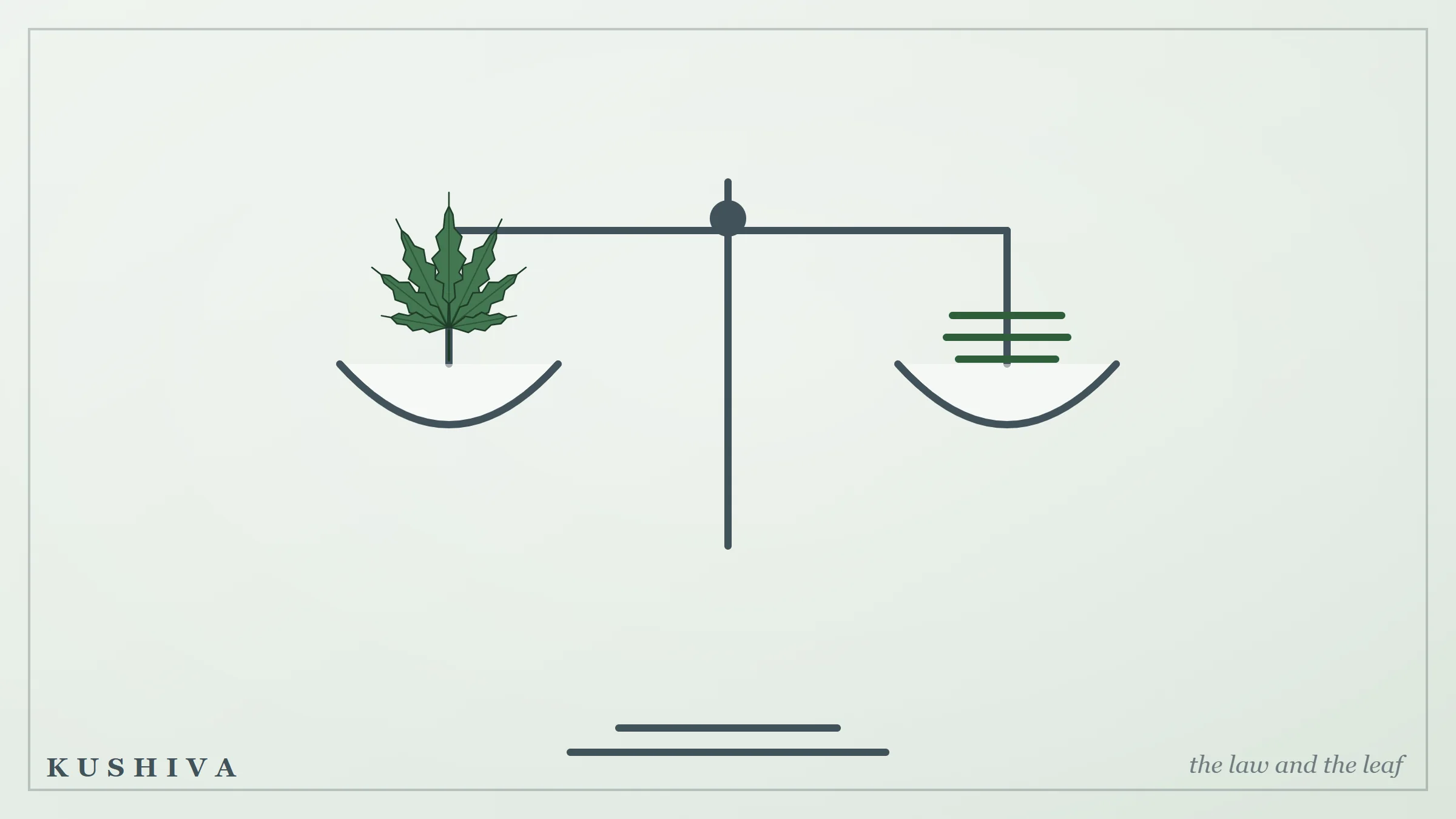
Why one is legal and the other is not
India's NDPS Act 1985 defines banned "cannabis" as charas and ganja, and any mixture of them, while specifically excluding the leaves and seeds. Because bhang is a leaf preparation, it falls outside that definition and is instead regulated by individual states, several of which license its sale. Ganja and charas stay squarely inside the ban. If you want the full legal breakdown, see our guide to whether cannabis is legal in India and the cannabis-law explainer linked below. The primary source is the NDPS Act 1985 on India Code.
How strong is bhang compared to weed?
Because it comes from the lower-potency leaves, bhang is generally milder than concentrated ganja or charas. That said, milder does not mean harmless. A bhang drink is eaten and drunk rather than smoked, so it is absorbed slowly and the effect can arrive late, last for hours, and catch people off guard if they take more while waiting for it to work. Every year festival hospitals see cases of people who underestimated exactly that. Respect the slow onset.
The cultural context
Bhang is woven into Indian tradition, associated with Lord Shiva and consumed during festivals such as Holi and Maha Shivratri. That cultural standing is part of why the law carved out the leaf in the first place. It is also why bhang shops can operate openly in states that license them, in a way that would be unthinkable for ganja.
Where this leaves the health conversation
The bhang-versus-weed split is really about the leaf, and the leaf is also the legal basis for medicinal Vijaya. The difference is that festival bhang is casual and unmeasured, whereas medicinal Vijaya is the same leaf handled the opposite way: lab-tested, measured into precise doses, and used under a practitioner's guidance. If the medical side is what interests you, our guide to Vijaya for sleep is a good next read.
Frequently asked questions
What is the difference between bhang and weed?
Bhang is made from cannabis leaves; weed (ganja) is the flowering tops, and charas is the resin. The leaves are lower in intoxicating compounds and are excluded from India's cannabis ban, while the tops and resin are banned.
Is bhang legal but weed illegal in India?
Yes. Bhang is a leaf preparation that falls outside the NDPS Act's definition of cannabis and is regulated by states, several of which permit it. Ganja and charas are banned nationwide.
Is bhang weaker than weed?
Generally yes, because it comes from the lower-potency leaves. But a bhang drink is absorbed slowly and can still produce a strong, long and delayed effect, so it should not be treated as harmless.
Why is bhang allowed during Holi and Shivratri?
Bhang has deep cultural and religious associations in India, particularly with Lord Shiva, and it is made from the legally excluded leaf. States that license it allow its sale, and festivals are its traditional occasion.
The bottom line
Bhang and weed are the same plant handled two different ways. One uses the mild, legally excluded leaf; the other uses the potent, banned tops and resin. That single distinction explains the whole apparent contradiction of Indian cannabis law. And it is the same leaf that, handled carefully and legally, becomes medicinal Vijaya. To explore that supervised route, you can browse our lab-tested Vijaya range.
Related from the Kushiva Journal
This article is general information, not legal or medical advice. Cannabis laws in India sit across central and state law and can change; rules also vary by state. For your specific situation, consult a qualified lawyer, and for any health use, a registered medical practitioner. Vijaya (cannabis leaf extract) is prescription-regulated in India and should only be used under medical supervision.