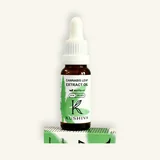

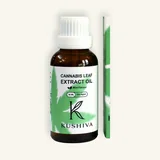

Anxiety is one of the three reasons people most often ask us about Vijaya. The other two, pain and sleep, we have written about already. Anxiety is the harder one to write honestly, because the research is genuinely split - some well-run trials found a clear effect, and one of the largest reviews ever done found the evidence too thin to recommend anything.
Kushiva makes cannabis leaf extract under India’s AYUSH framework. Whether it suits you is a question for your doctor.See the range
Both of those things are true at the same time. This article explains why, in plain language, and what it means if you are thinking about it.
This article is educational and is not medical advice. Vijaya (cannabis leaf extract) is a prescription-regulated ingredient in India and should only be used under the guidance of a registered medical practitioner. If you are pregnant or breastfeeding, take regular medication, or have a diagnosed health condition, speak to a doctor before considering any cannabis-based product.
Key Takeaways
- Most of the encouraging anxiety research is on CBD specifically, not on whole cannabis - and the doses used in trials were far higher than anything in a wellness product.
- A 2011 trial found CBD reduced public-speaking anxiety in people with social anxiety disorder to roughly the level of people without it.
- A 2019 review of 83 studies in The Lancet Psychiatry concluded the overall evidence for cannabinoids in anxiety is scarce and low quality. This is the honest counterweight.
- THC, unlike CBD, can make anxiety worse - and it is dose-dependent, which is exactly why supervision and low starting doses matter.
- Nothing here replaces treatment. The best evidence for anxiety remains therapy and, where indicated, prescribed medication.
Quick Answer
There is real, published evidence that CBD reduces situational anxiety in the short term, particularly in social anxiety. There is much weaker evidence that cannabis products reduce anxiety disorders over the long term, and some evidence that THC at higher doses does the opposite. If you are considering Vijaya for anxiety in India, it is a prescription decision, it should start low, and it should sit alongside proper treatment rather than replace it.
What the encouraging studies actually found
The most cited piece of work here is a 2015 review in Neurotherapeutics, which pulled together the preclinical and human evidence for CBD across generalised anxiety, panic, social anxiety, OCD and PTSD. Its conclusion was that the animal evidence strongly supported CBD as an anti-anxiety compound when given as a single dose, but that very few studies had looked at what happens when you take it every day for months (Neurotherapeutics, 2015). That gap between "one dose in a lab" and "daily use in a life" has still not really been closed.
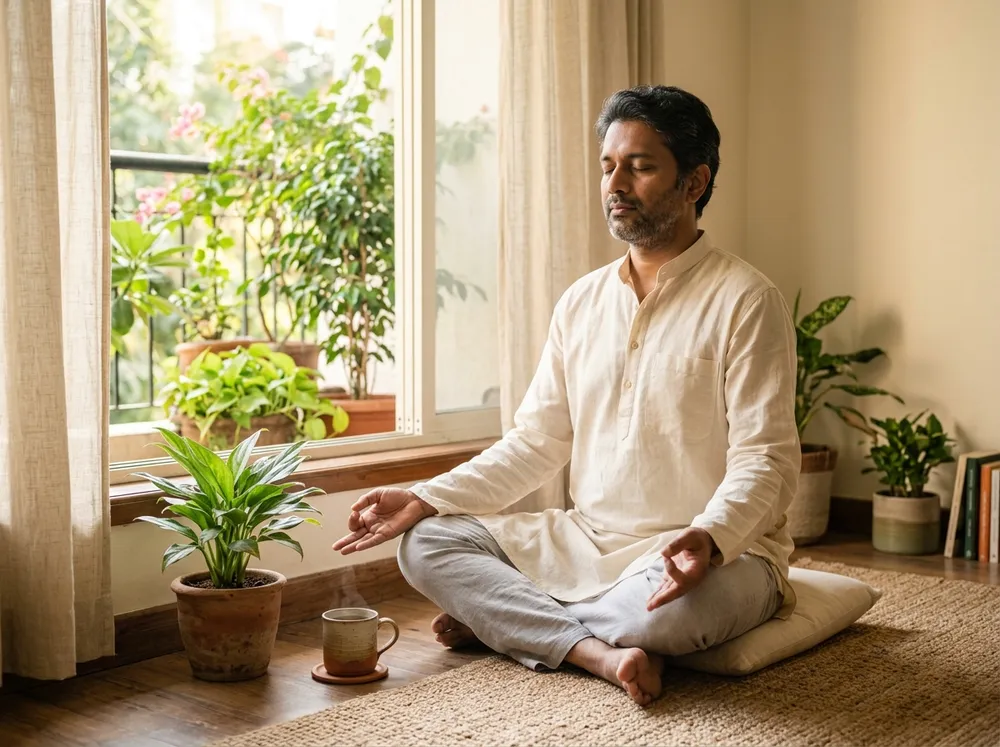
The single most quoted human trial is small and quite elegant. Twenty-four people with social anxiety disorder, none of whom had been treated before, were given either 600 mg of CBD or a placebo, then made to give a speech in front of an audience. The CBD group's anxiety during the speech dropped to roughly the level of a healthy comparison group, while the placebo group's did not (Neuropsychopharmacology, 2011).
Note the dose. Six hundred milligrams in a single sitting is a pharmaceutical-scale dose. It is not comparable to a few drops of an oil, and any brand implying otherwise is stretching the study past what it says.
A four-week placebo-controlled trial in teenagers with social anxiety disorder later reported a reduction in symptoms with repeated CBD dosing rather than a single dose (Frontiers in Psychology, 2019), which is one of the few attempts to answer the "what about daily use" question.
Then there is the real-world data. A psychiatric clinic in the United States reviewed the charts of 103 patients given CBD alongside their usual treatment. Anxiety scores fell within the first month in 57 patients, or 79.2%, and stayed down for the length of the study. Sleep scores improved in 48 patients, 66.7%, but moved around more over time. CBD was well tolerated in all but three patients (The Permanente Journal, 2019).
That last study reads well, and it is worth being clear about its limits: it is a retrospective chart review, not a controlled trial. There was no placebo group. People who feel better tend to keep coming back, and people who do not, stop. That biases the numbers upward.
The study that argues the other way
In 2019, The Lancet Psychiatry published a systematic review and meta-analysis covering 83 studies, 40 of them randomised controlled trials, on cannabinoids across mental health conditions. Seventeen of those trials dealt with anxiety.
Its verdict was blunt. There is scarce evidence that cannabinoids improve anxiety disorders, and what evidence exists for a small benefit is very low quality and mostly comes from people who had anxiety alongside another medical condition, such as chronic pain (The Lancet Psychiatry, 2019). The authors went further and said there was not enough evidence to guide the use of cannabinoids for mental disorders within a regulatory framework at all.
We include this because leaving it out would make this article marketing rather than information. If you only ever read brand websites, you would never learn that this review exists.
Why the evidence points in two directions
The disagreement is less mysterious than it looks. Four things explain most of it.
- CBD and THC are not the same molecule, and they do not behave the same way. Almost all the positive anxiety findings are for CBD on its own. THC has a dose-dependent relationship with anxiety - low doses can feel calming, higher doses can produce exactly the racing, self-conscious, uneasy feeling people were trying to get away from.
- Most trials measure a moment, not a condition. A simulated speech test tells you about anxiety in the next ninety minutes. It does not tell you about a disorder someone has lived with for nine years.
- The doses are far apart. Trials use hundreds of milligrams of isolated CBD. Consumer products contain a fraction of that, in a different form, with other compounds present.
- Anxiety responds strongly to placebo. This is not a criticism of anyone. It is a well-documented feature of the condition, and it is why uncontrolled studies read more impressively than controlled ones.
A note on how this actually goes: Rakash
The following is a first-person account. It is a composite, assembled from the kinds of things people describe during doctor-supervised consultations. The name and small details are invented. It is written to read like real life because the situations are real, but it is one person's experience, not evidence, and not medical advice.
I am 41, I run operations for a logistics firm in Bengaluru, and for about two years I had been waking at four in the morning with my heart going. Not a panic attack exactly. More like my body had decided the day had started and there was no arguing with it.
I want to be honest about the order things happened in, because I think the order matters. I read about cannabis first. I looked for a product first. The doctor consultation, when I finally did it, was the part that actually changed things - and most of what he said had nothing to do with Vijaya. He asked how much coffee I drank. It was five cups. He asked when I stopped looking at my phone. The answer was that I did not.
We did start a low dose, and I will not pretend the first ten days were impressive. Nothing much happened, and I remember being annoyed about it, because I had spent the money and I wanted the story where it works immediately. It did not work immediately.
What changed, some weeks in, was narrower than I had hoped for and more useful than I expected. The four-a.m. thing did not stop, but the physical part of it - the chest tightness, the sense that something was wrong before I had thought of anything to be worried about - softened. The thought was still there. The alarm underneath it was quieter. I could lie there and be bored instead of afraid, and eventually go back to sleep.
Here is the part I would want someone to tell me. It did not fix why I was anxious. I was anxious because I was managing a team badly and not saying so. That took a therapist and a difficult conversation with my director. The extract made the mornings survivable while I did the actual work. If I had treated it as the whole answer I think I would still be waking up at four.
— Rakash, 41, Bengaluru. Composite account, name invented.
If you are considering it
A few things worth holding on to.
- Start with a doctor, not a product. In India, Vijaya is prescription-regulated, so this is not optional - but it is also the step most likely to help, whatever is decided about the extract.
- Start low and go slowly. With THC present, more is not better and can be worse. This is the single most common mistake.
- Give it a fair trial, and set a review date. Judging it after three days tells you very little. Judging it after three months without ever asking whether it is working tells you even less.
- Tell your doctor everything else you take. Cannabinoids interact with a long list of common medicines, which is a big enough subject that we have written about it separately.
- If anxiety is affecting your work, relationships or safety, treat that as the priority. Therapy and prescribed treatment have a far stronger evidence base than anything discussed here.
We would rather you finished this article with an accurate picture than an encouraging one. The short version: promising for some people, in some situations, at doses most products do not contain, with a serious review saying the overall evidence is still weak. That is where the science honestly sits in 2026.
If anxiety is what brought you here, the useful next step is a conversation rather than a purchase. Every Vijaya order at Kushiva goes through a prescription and medical-review step before dispatch, so you can browse our lab-tested Vijaya range and begin with a doctor review rather than a guess.
About Kushiva
What we make, and how it is sold.
Kushiva sells cannabis leaf extract in four formats under India’s AYUSH framework. Strength is stated as a number on the approved label, every batch has a certificate of analysis, and every order is reviewed by an in-house doctor before dispatch. Any decision about whether a product suits you belongs with your own doctor.
Related from the Kushiva Journal
- What Reddit says about cannabis and anxiety
- Vijaya for sleep and insomnia: what the evidence says
- Vijaya and your other medicines: what the research says about interactions
- CBD vs THC: the real difference
- Migraine explained: what is actually happening
- Burning feet at night: diabetic nerve pain explained
- Period pain explained: causes and timing