A trusted name in cannabis wellness in IndiaFree delivery on every orderA trusted name in cannabis wellness in IndiaFree delivery on every orderA trusted name in cannabis wellness in IndiaFree delivery on every order
Skip to Content
DHM-TEA-250

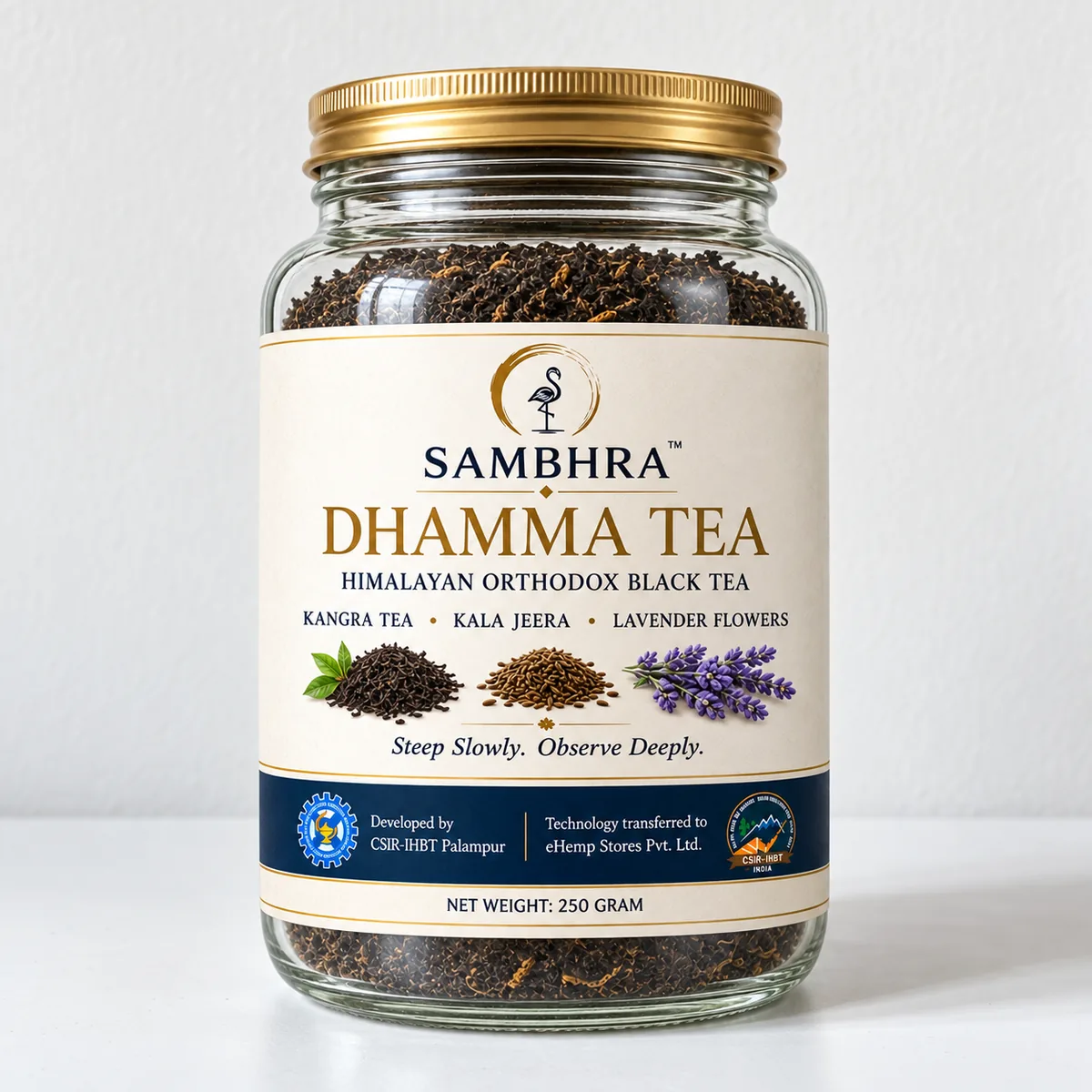
Dhamma Tea - Himalayan Botanical Tea

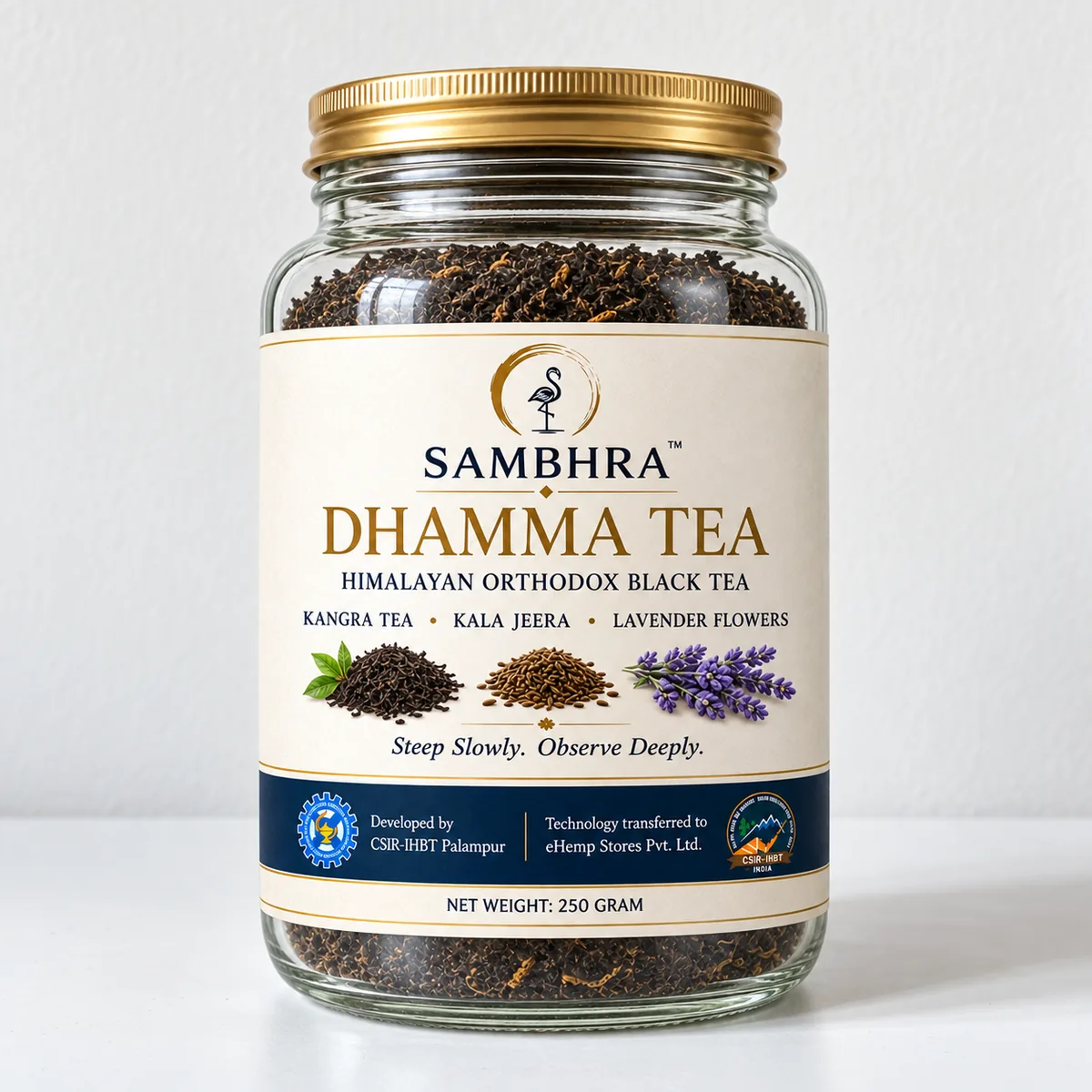
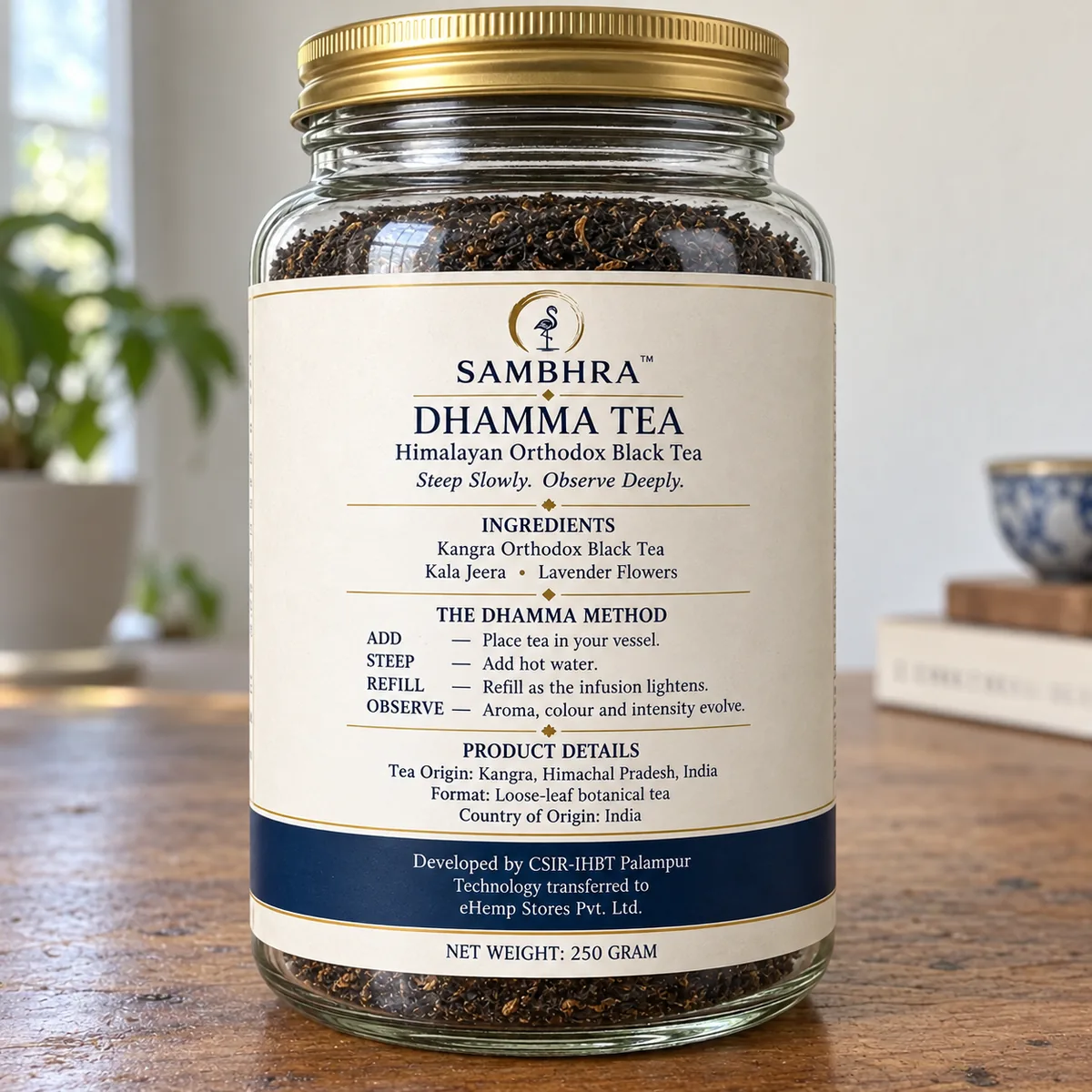
Dhamma Tea is Kangra orthodox black tea blended with kala jeera and lavender flowers, developed by CSIR-IHBT Palampur and made for slow, repeated steeping. 250 g of loose leaf in a glass jar, under the Sambhra brand. It contains no cannabis.

250 g glass jarKangra black teaLoose leafNo cannabis
₹ 2,380.95 ₹ 2,380.95
Buy now
Responsible Adult use only Private Discreet packaging Secure Online checkout
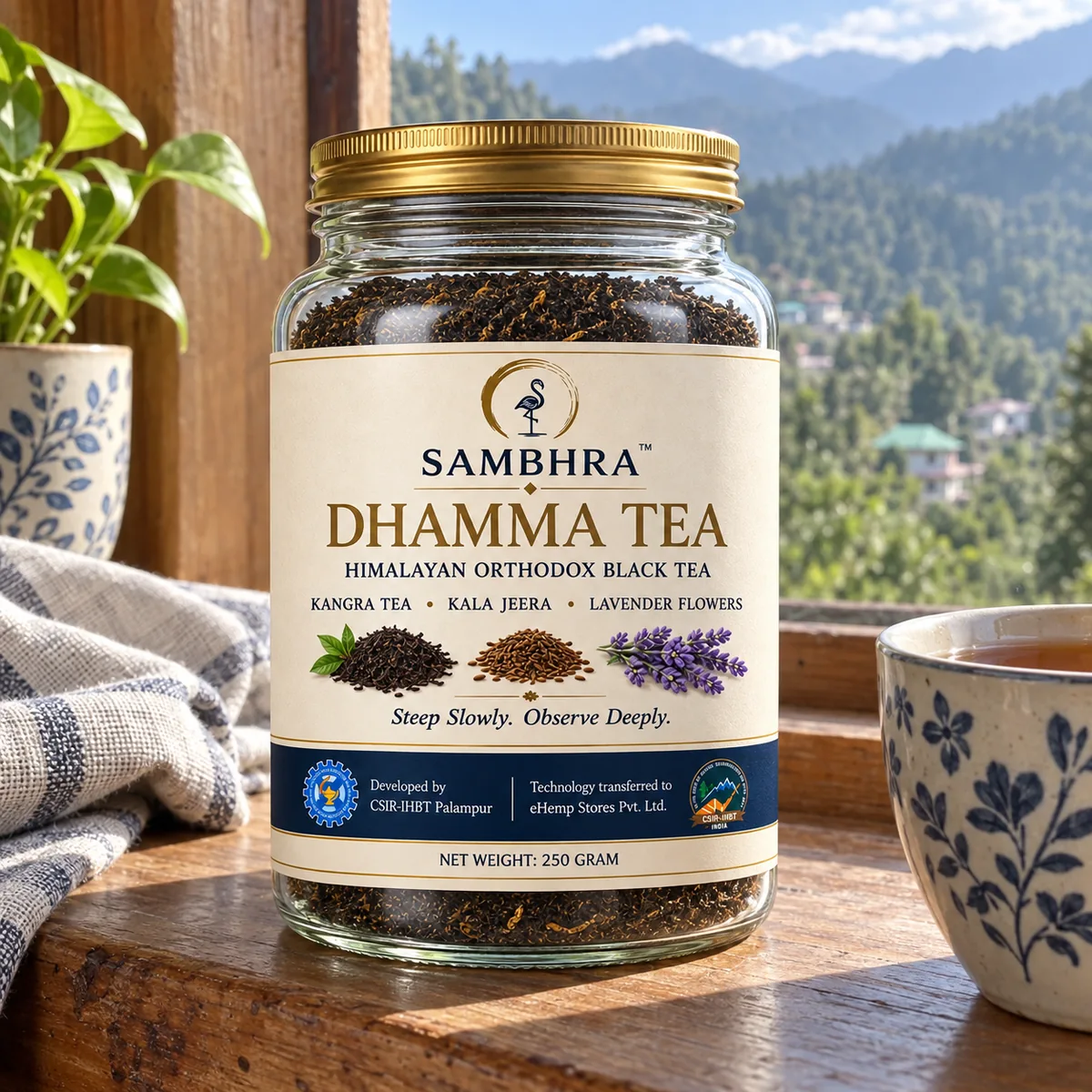
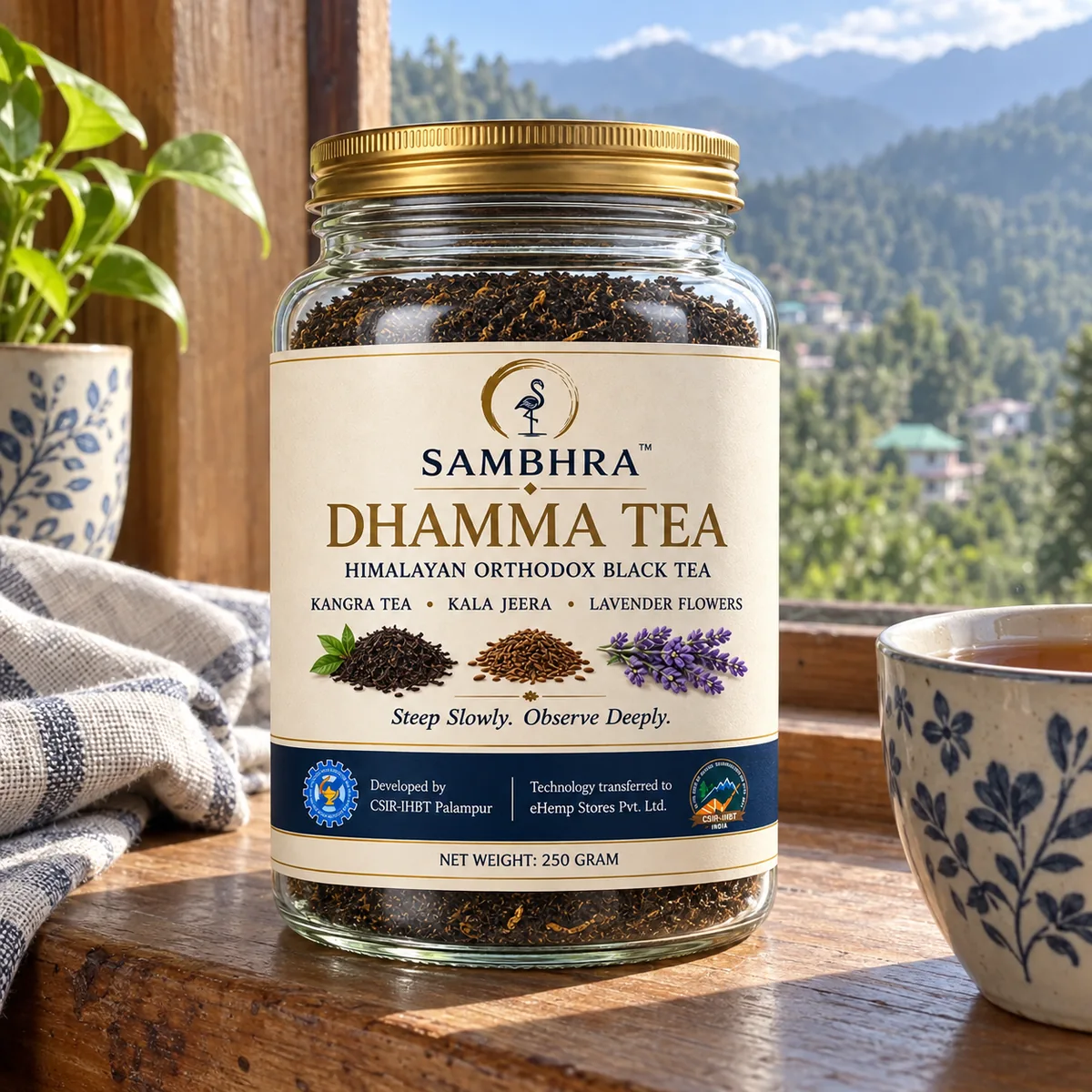
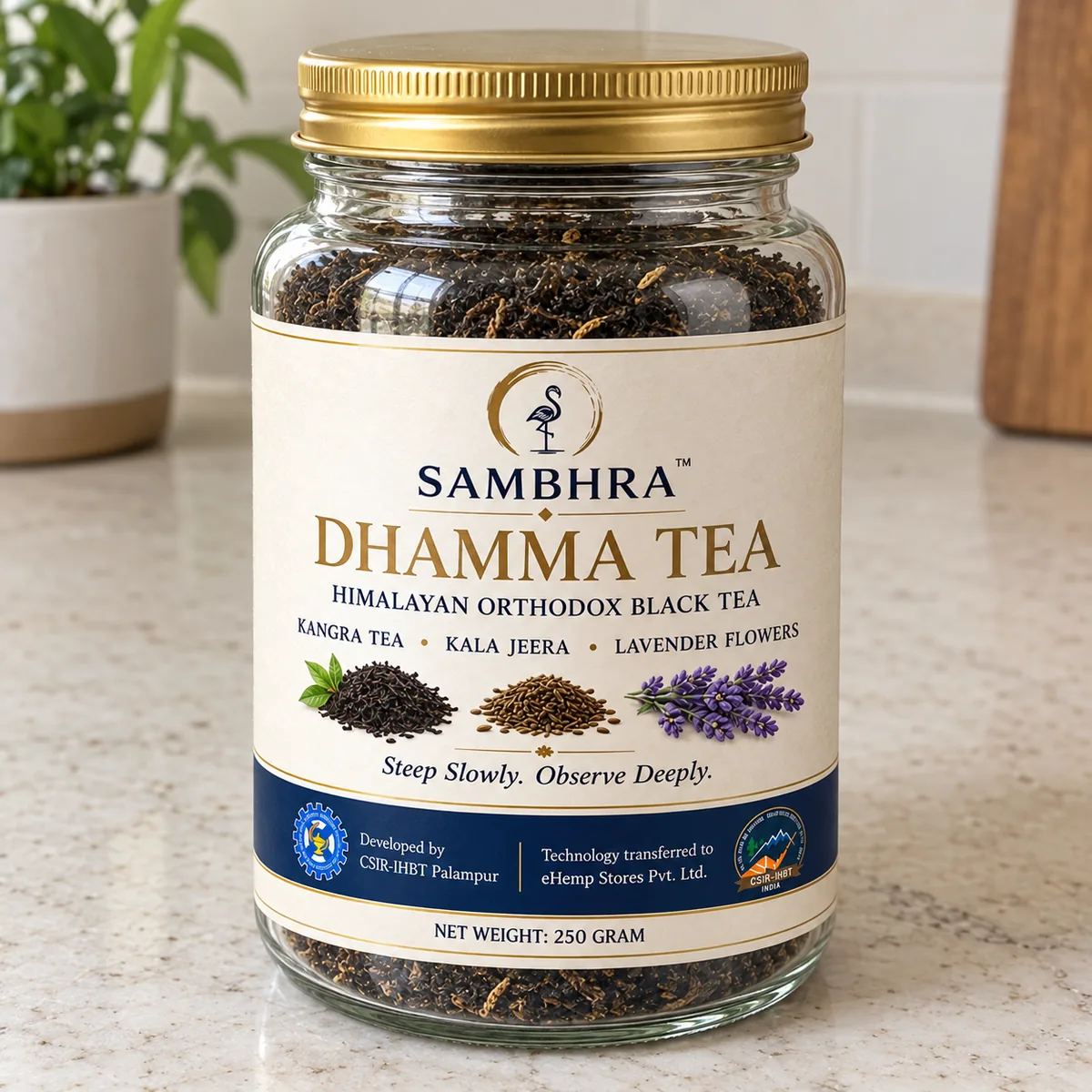
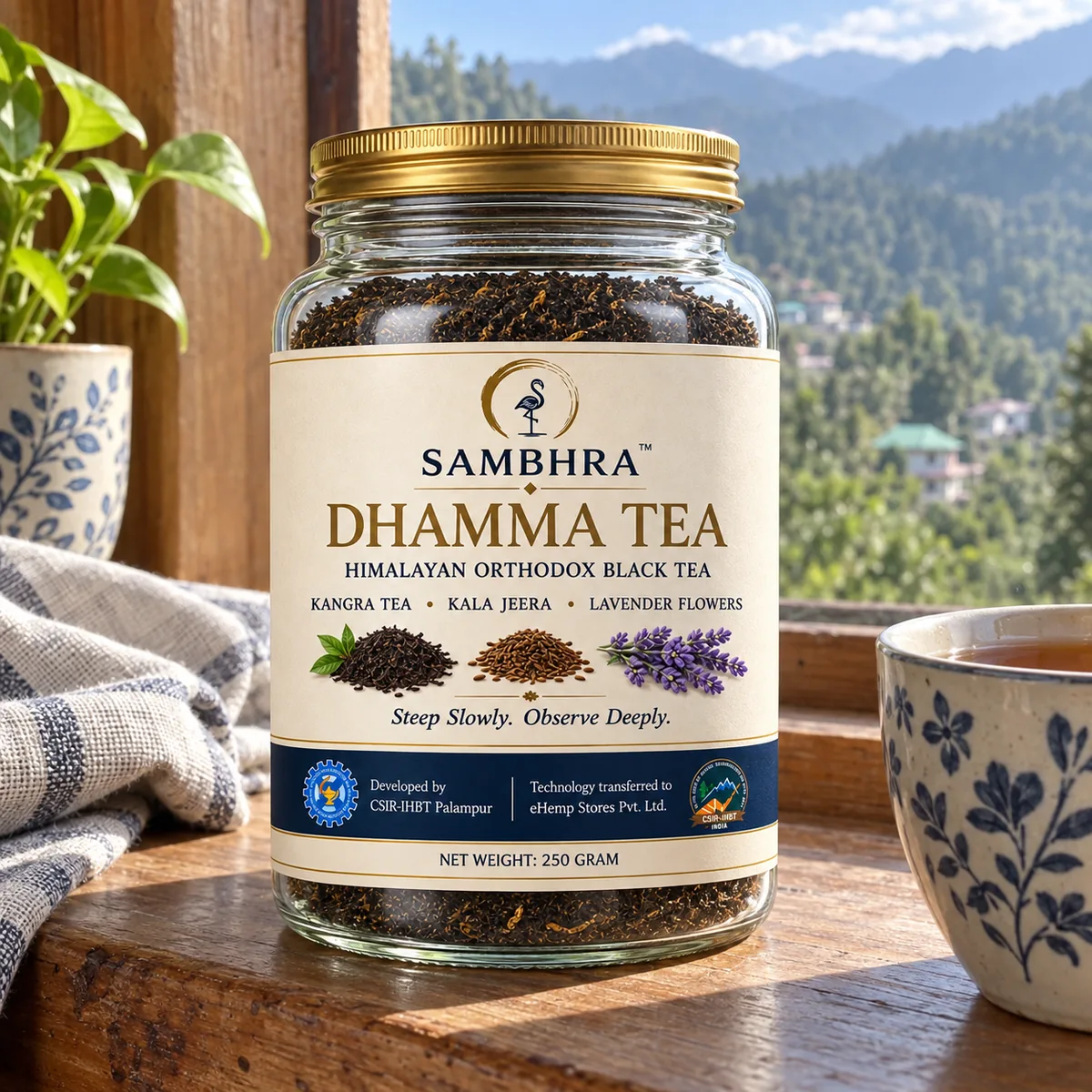
Sambhra Dhamma Tea 250 g glass jar on a wooden window ledge in a Himalayan home, green mountain slopes and a ceramic cup of tea beside it
Composition

What’s inside

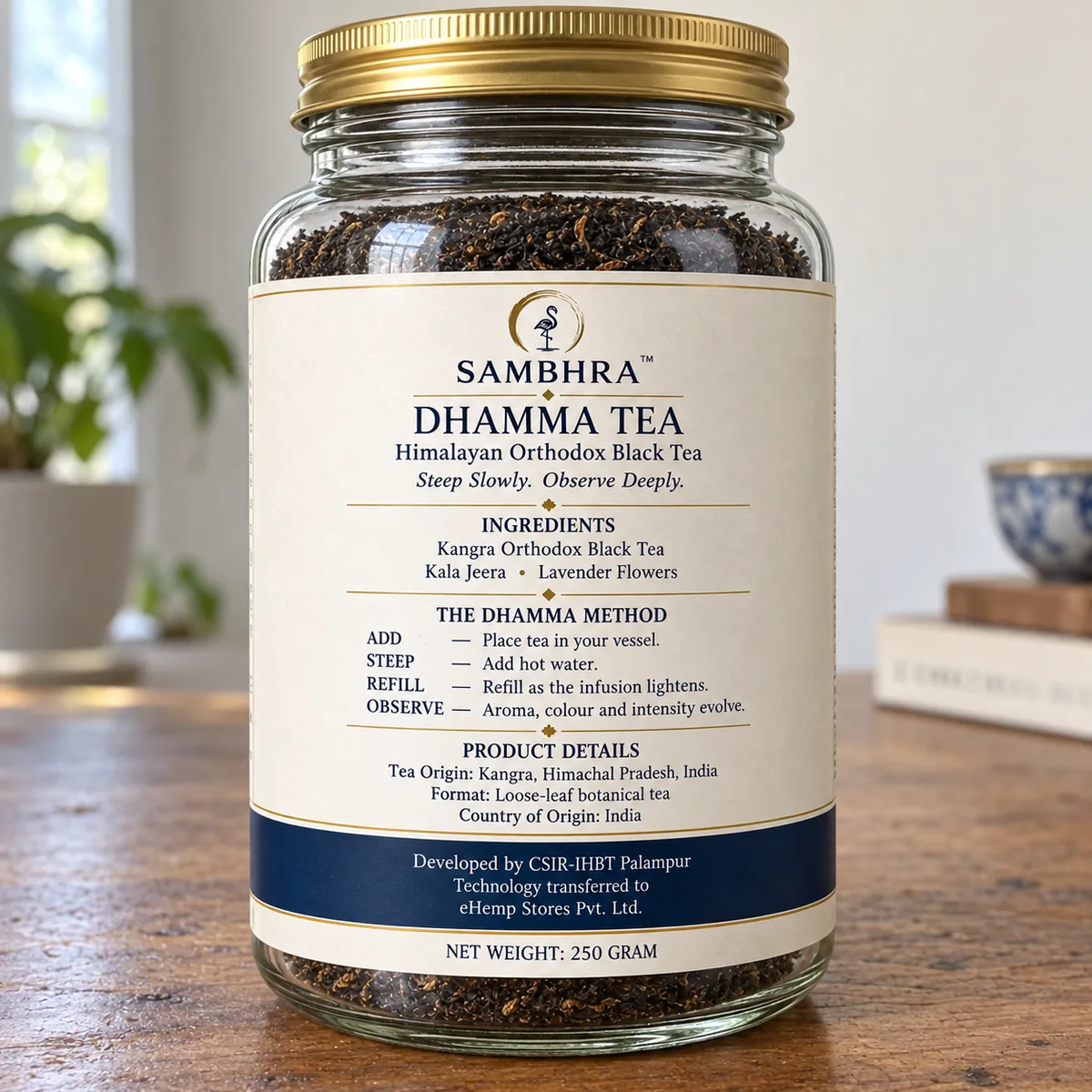
Orthodox black tea from the Kangra Valley, blended with kala jeera and lavender flowers. Nothing else — no cannabis, no flavouring, no extract.

Tea baseKangra orthodox black tea
BotanicalsKala jeera, lavender flowers
OriginKangra Valley, Himachal Pradesh
Net weight250 g
FormatLoose leaf, in a glass jar with a screw lid
Cannabis contentNone
The blend

Three things, whole

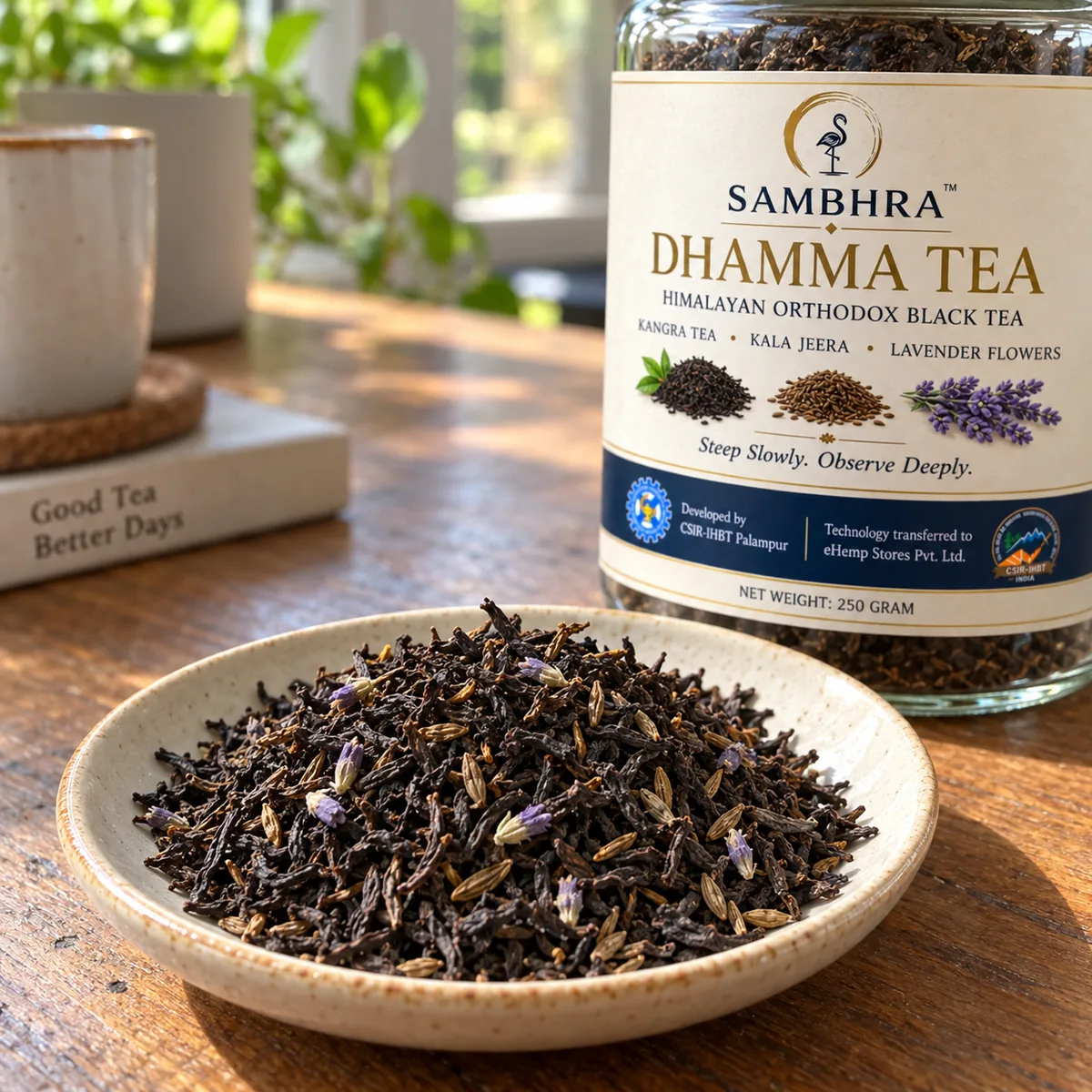
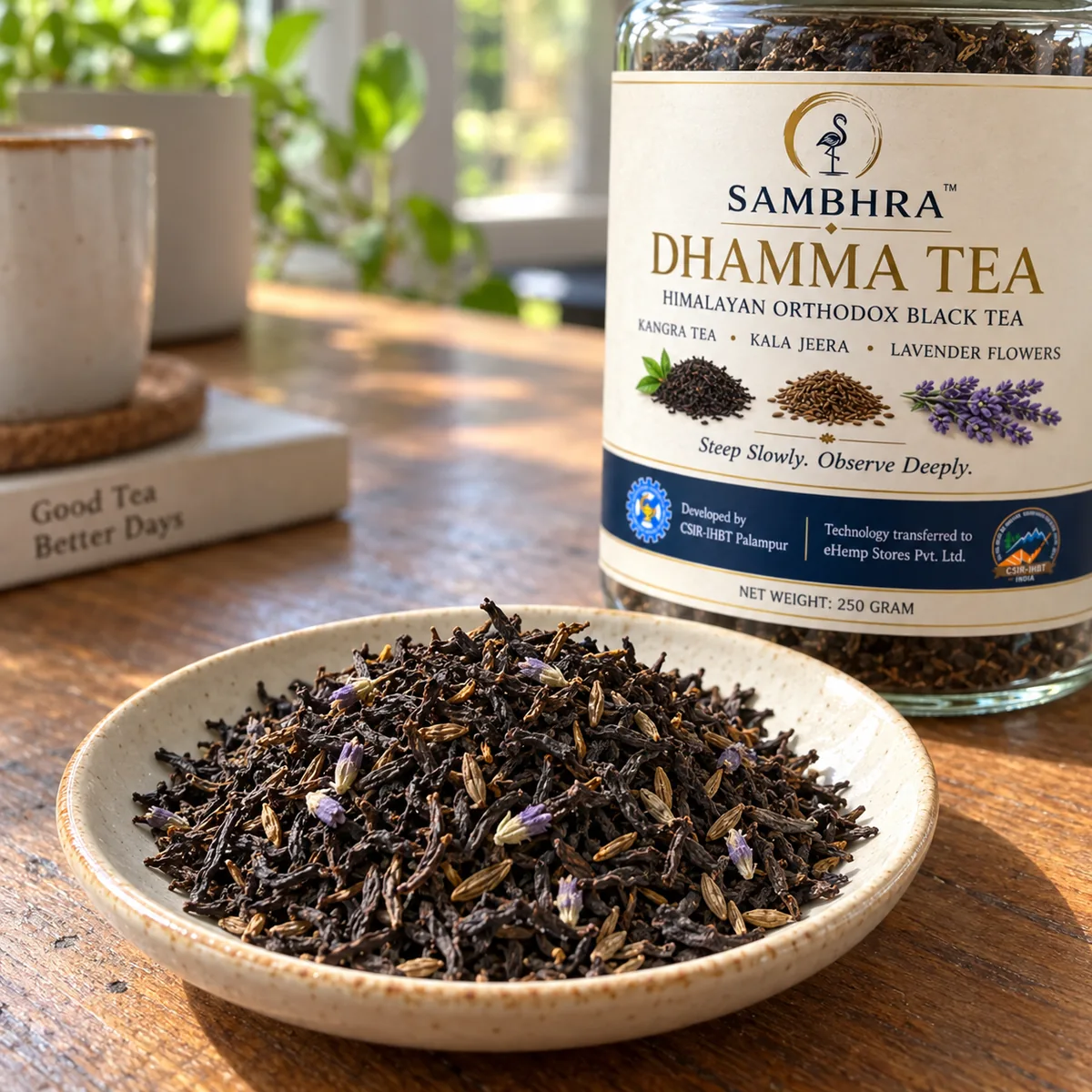
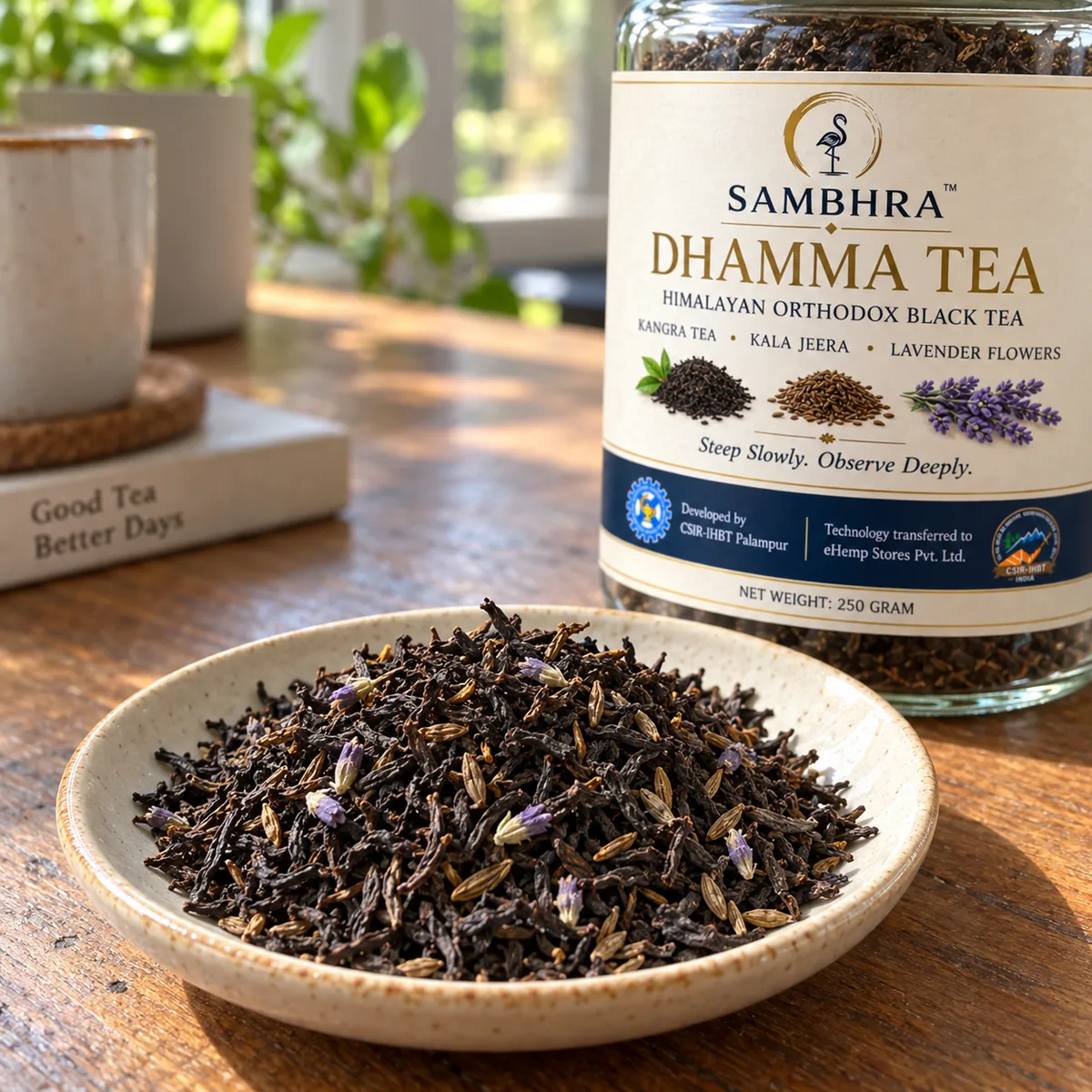
Dry Dhamma Tea on a cream saucer: twisted dark orthodox black tea leaves with a few lavender flowers and slender kala jeera seeds
01

Kangra tea

Grown in the Kangra Valley of Himachal Pradesh. Kangra Tea is a registered Geographical Indication of India, so the name belongs to tea actually grown there.

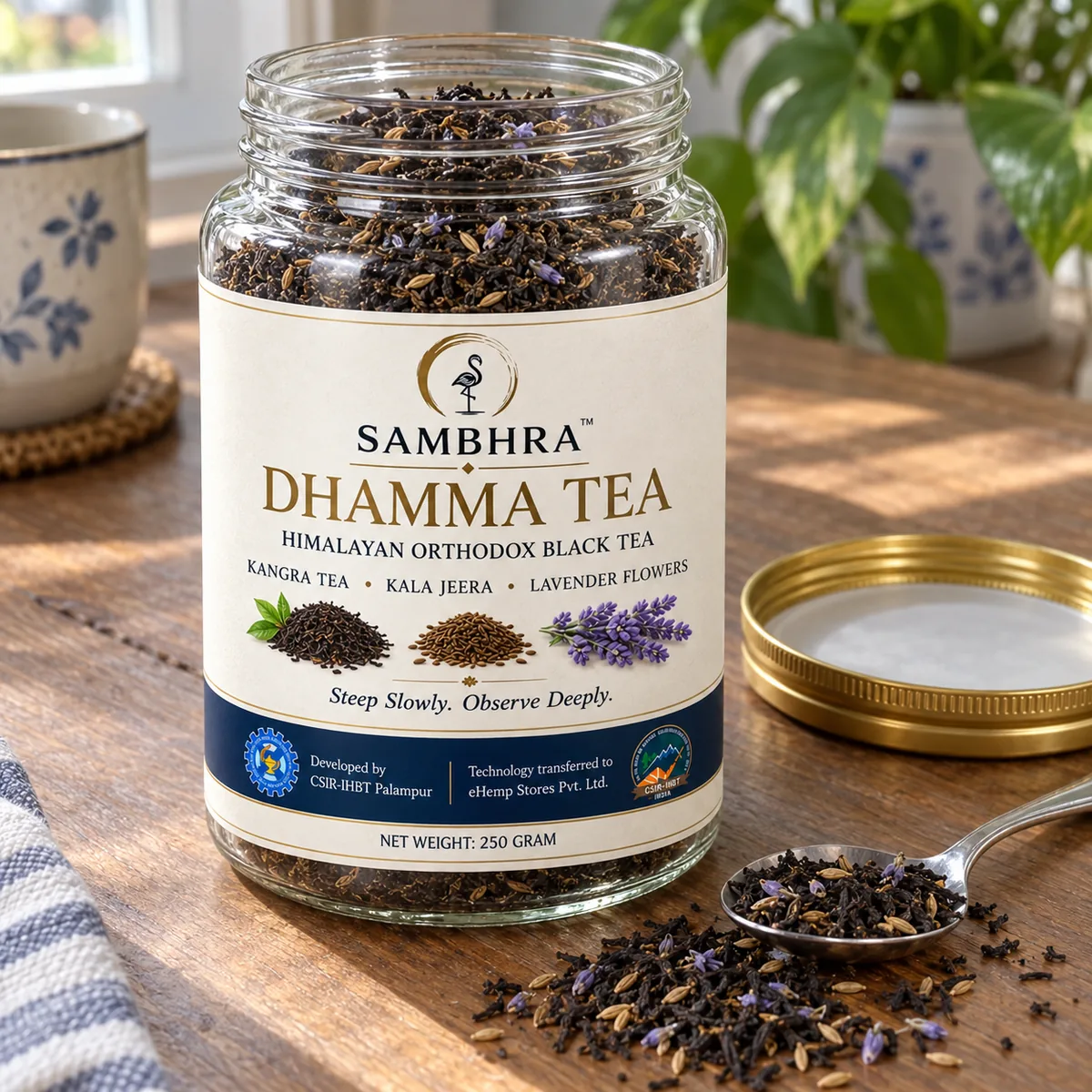
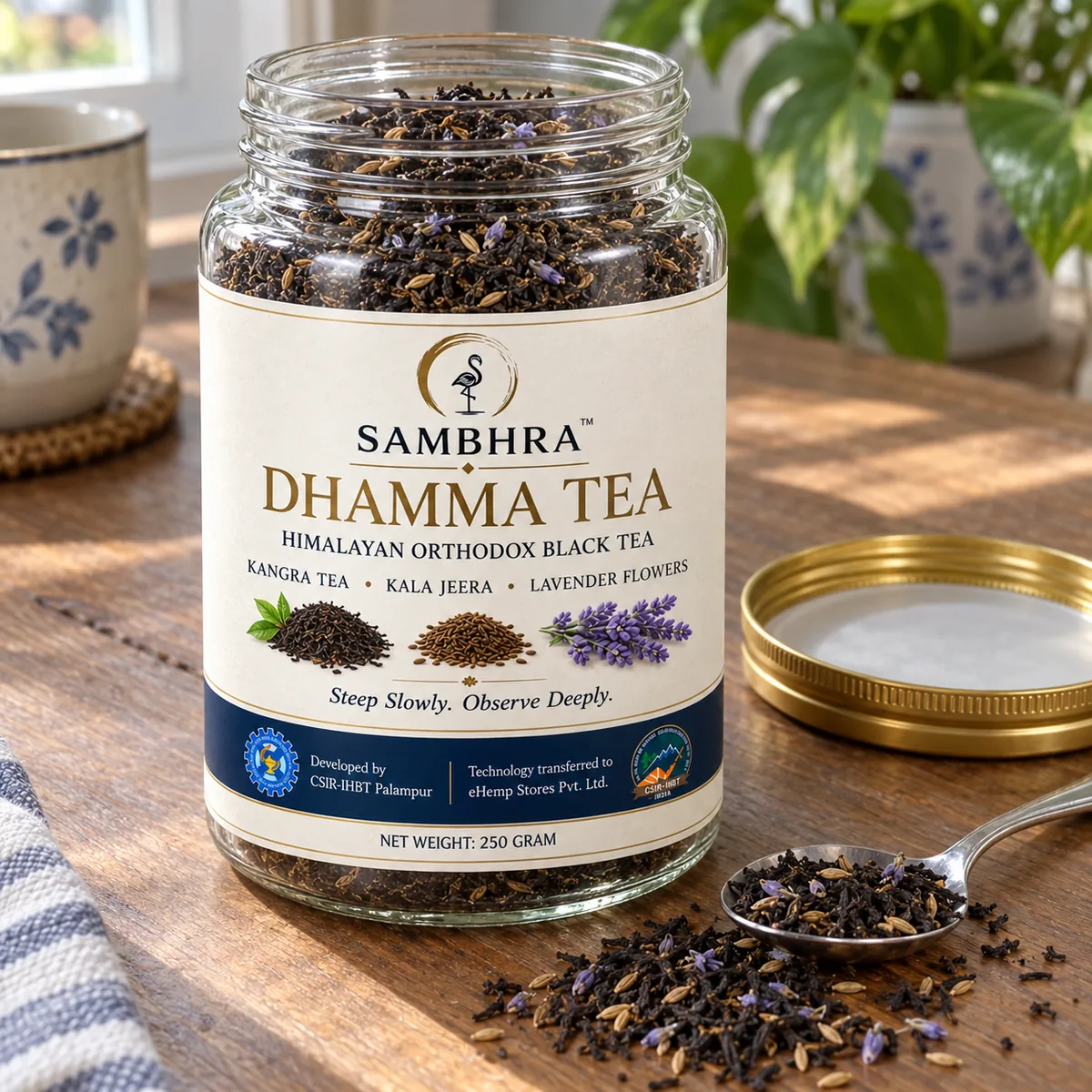
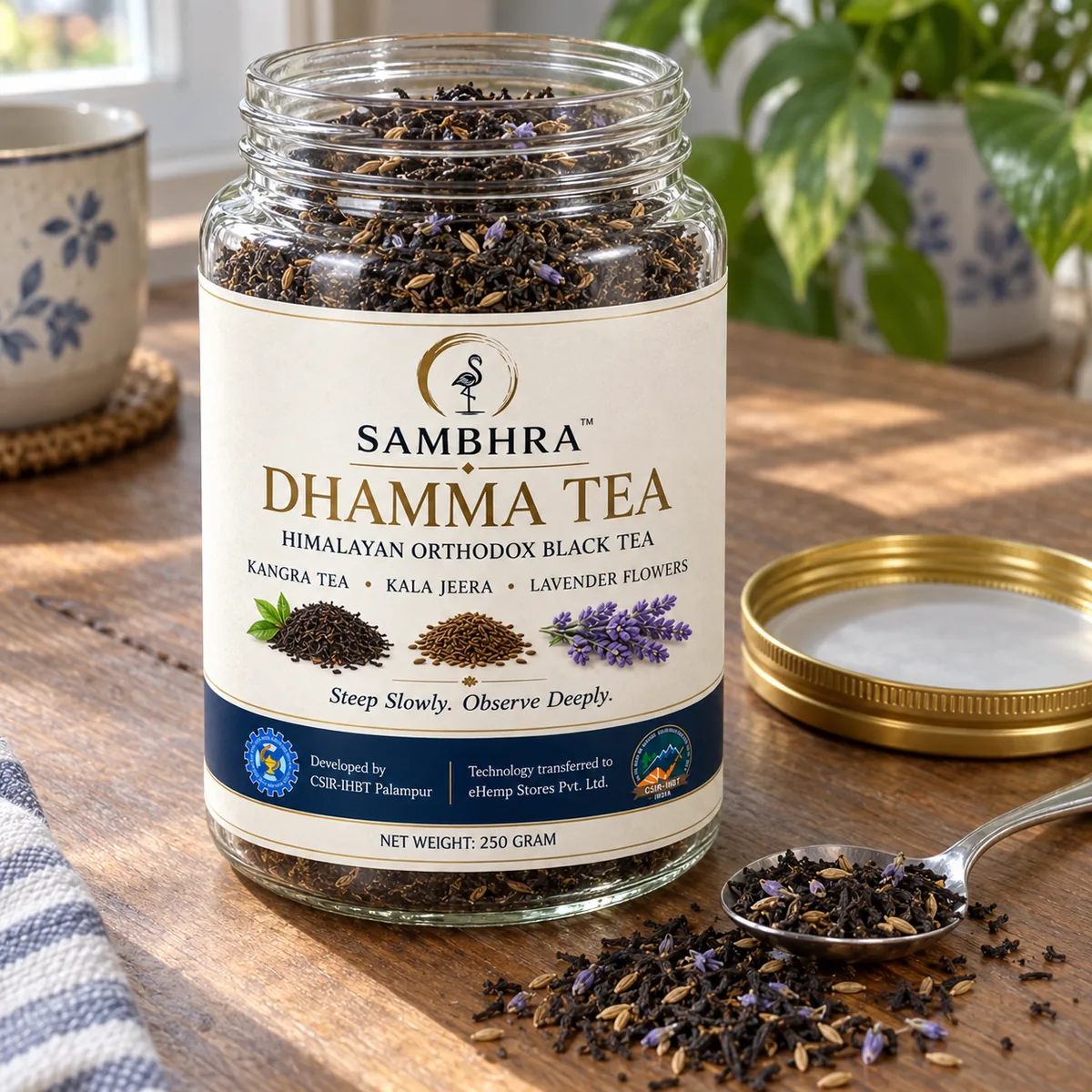
Dhamma Tea glass jar open with its gold screw lid beside it, showing loose black tea, lavender buds and kala jeera seeds inside
02

Kala jeera

An intensely aromatic Himalayan spice, added whole. It is what gives the cup its earthy note under the tea.

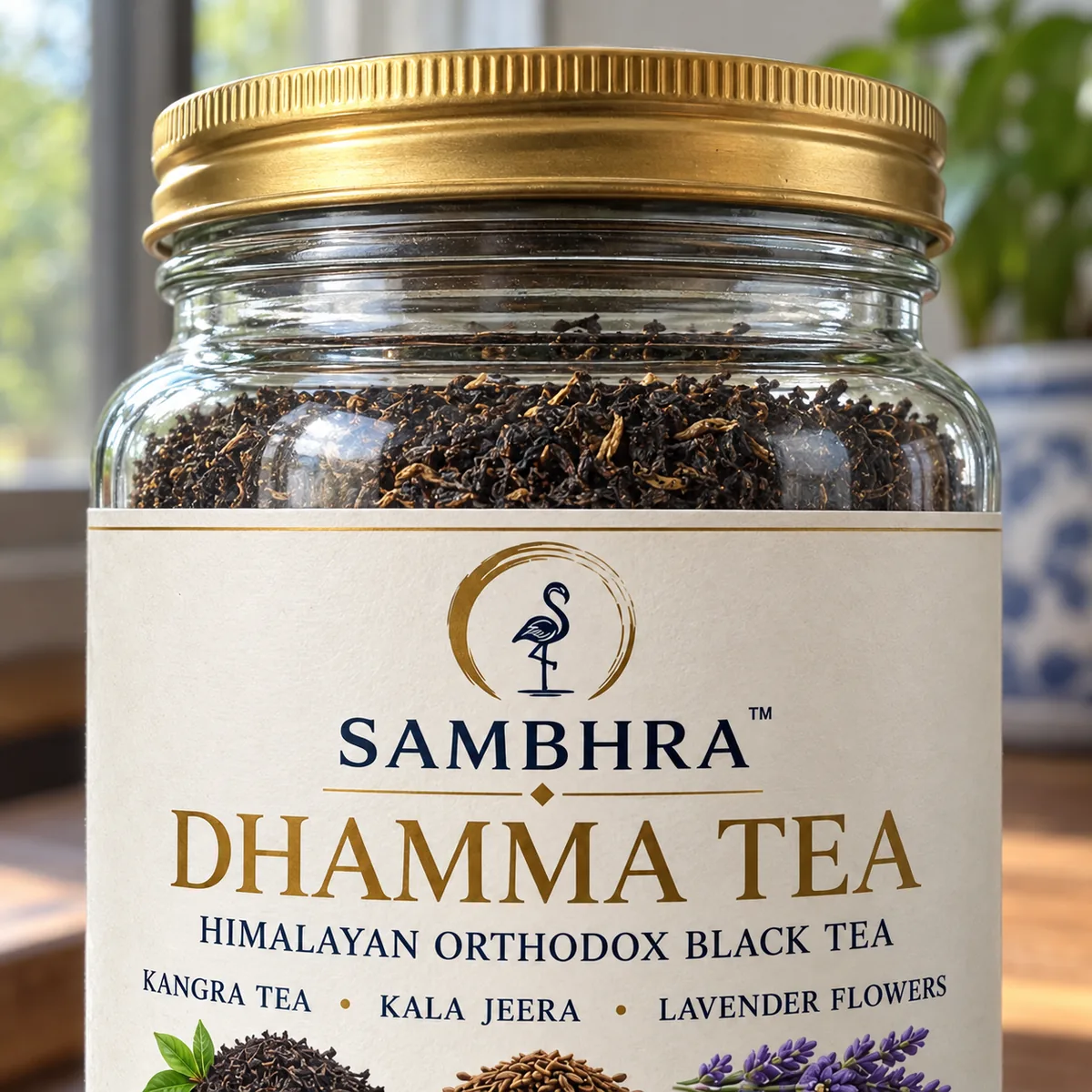
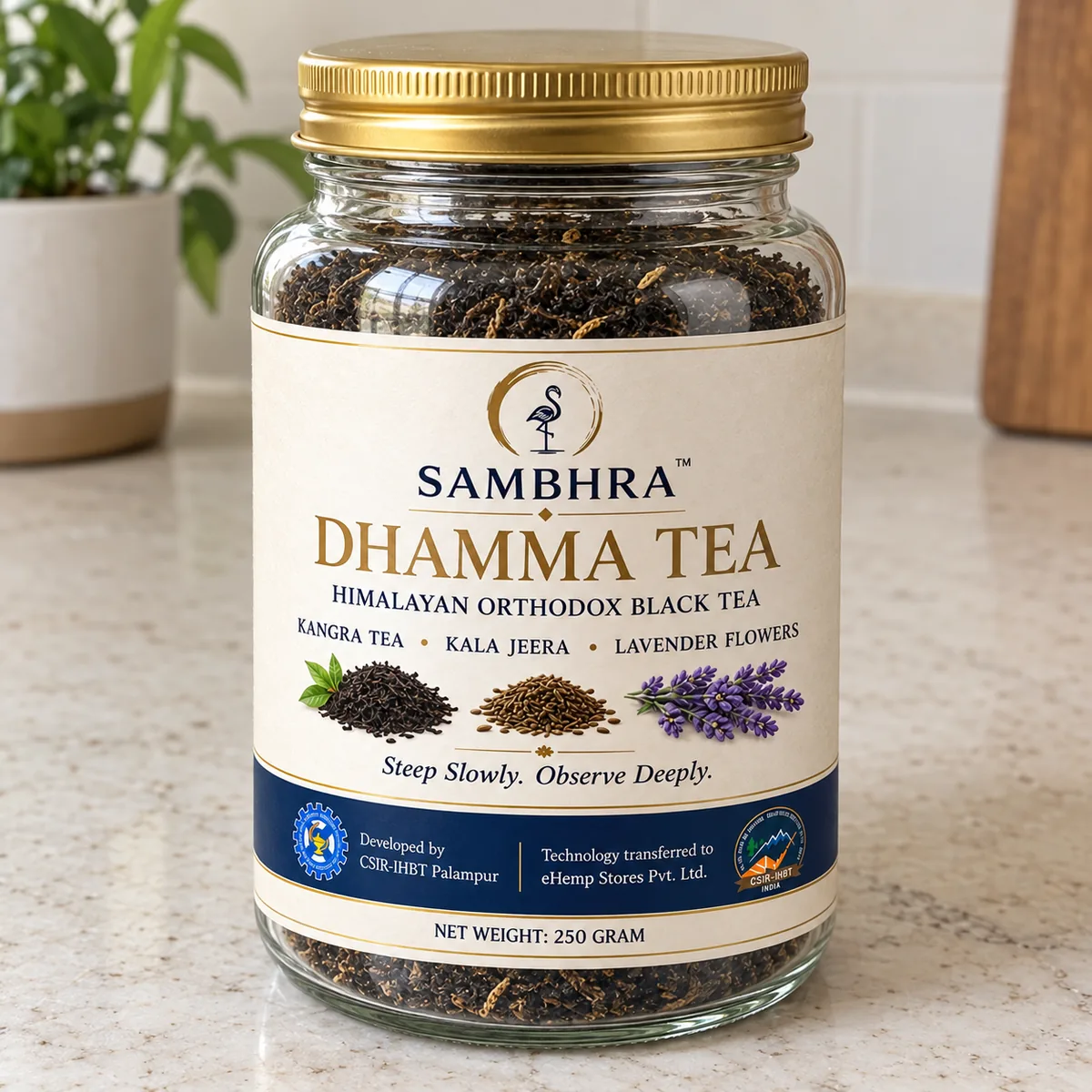
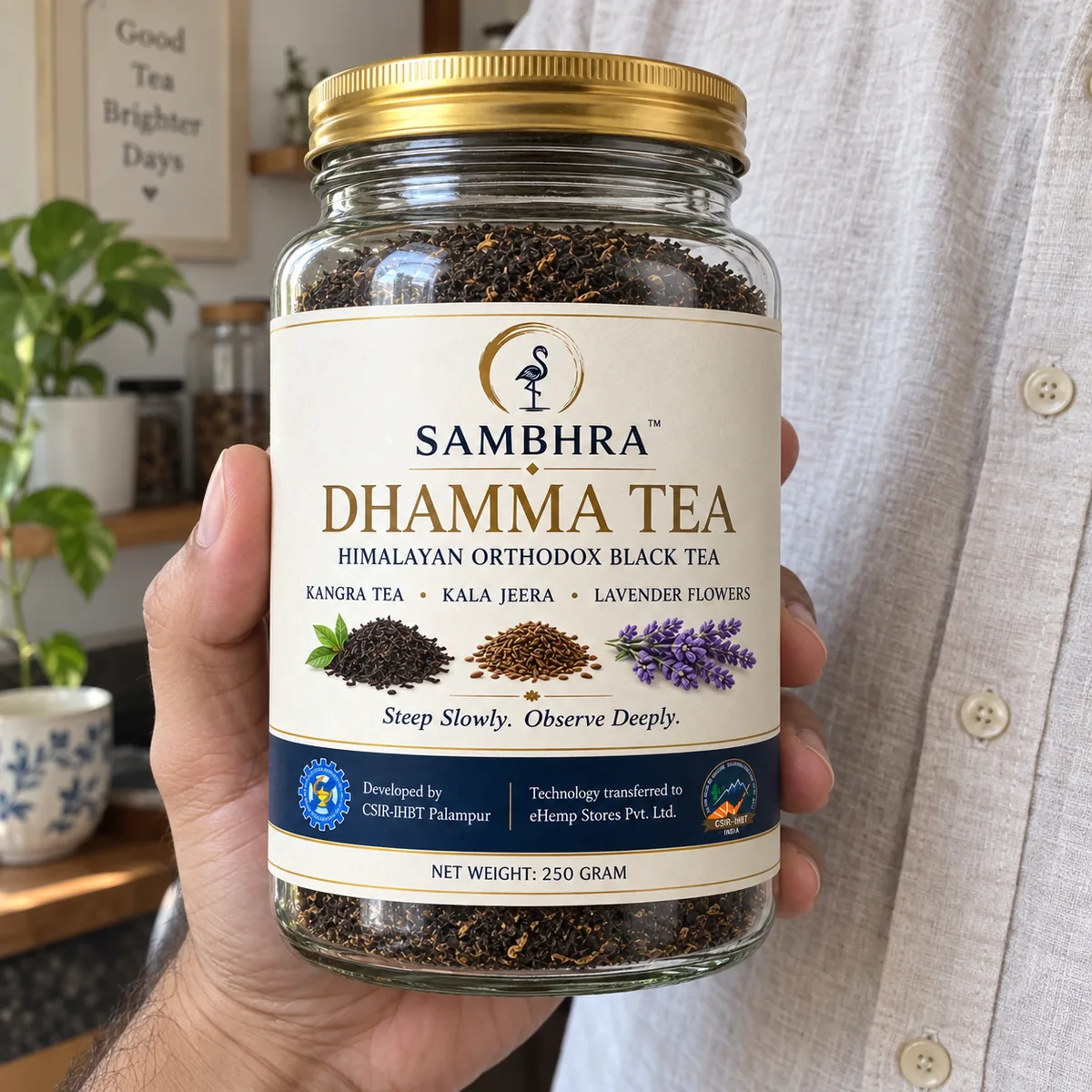
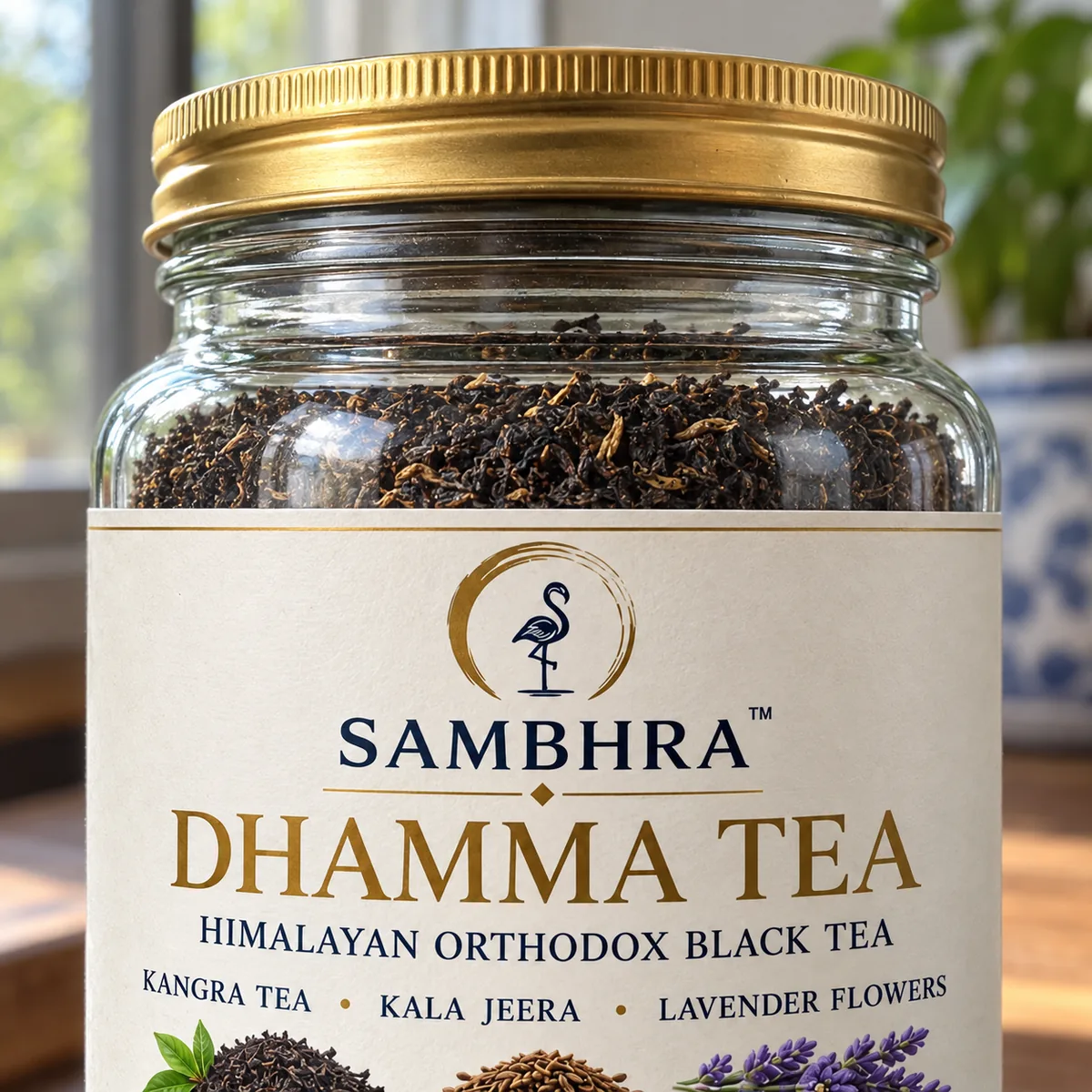
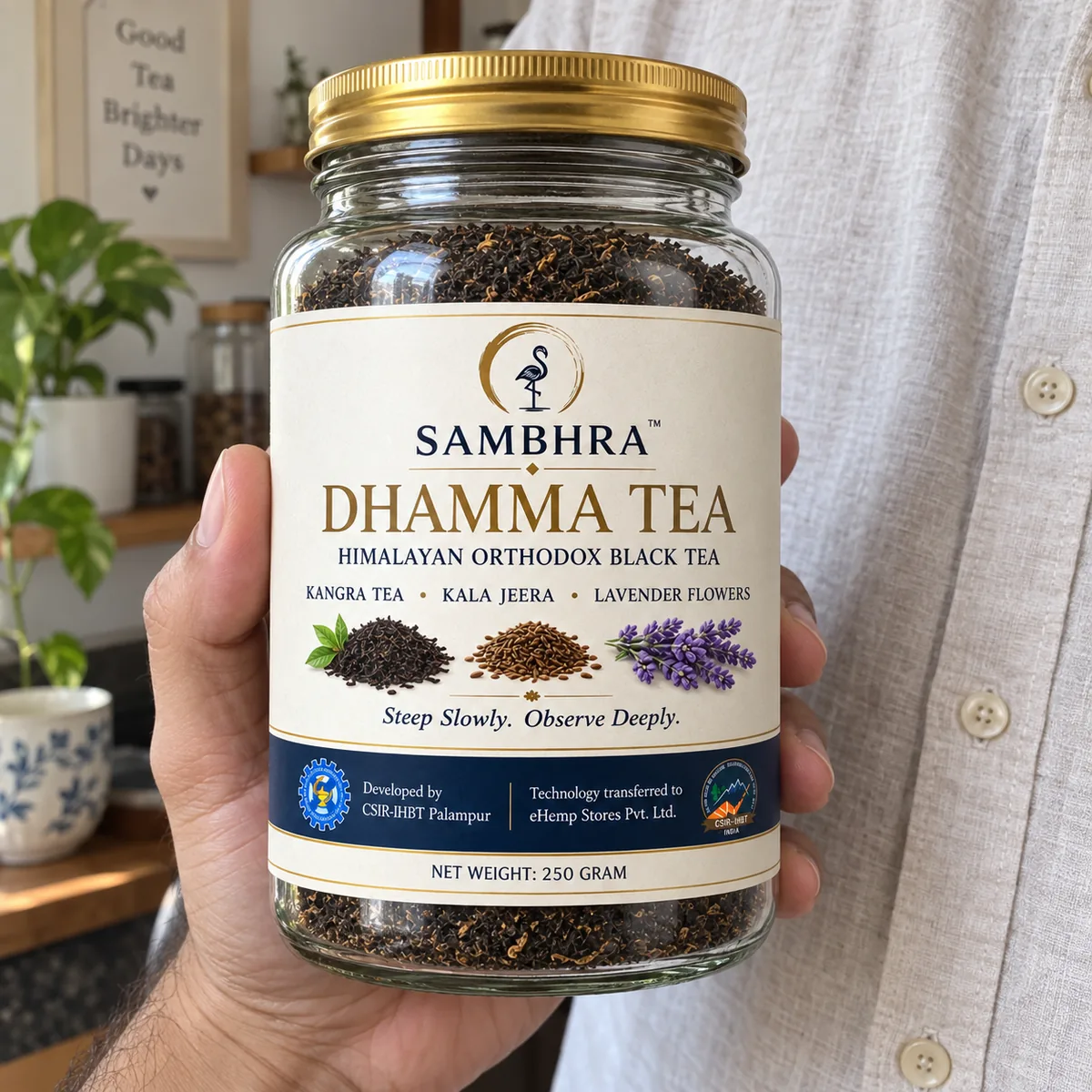
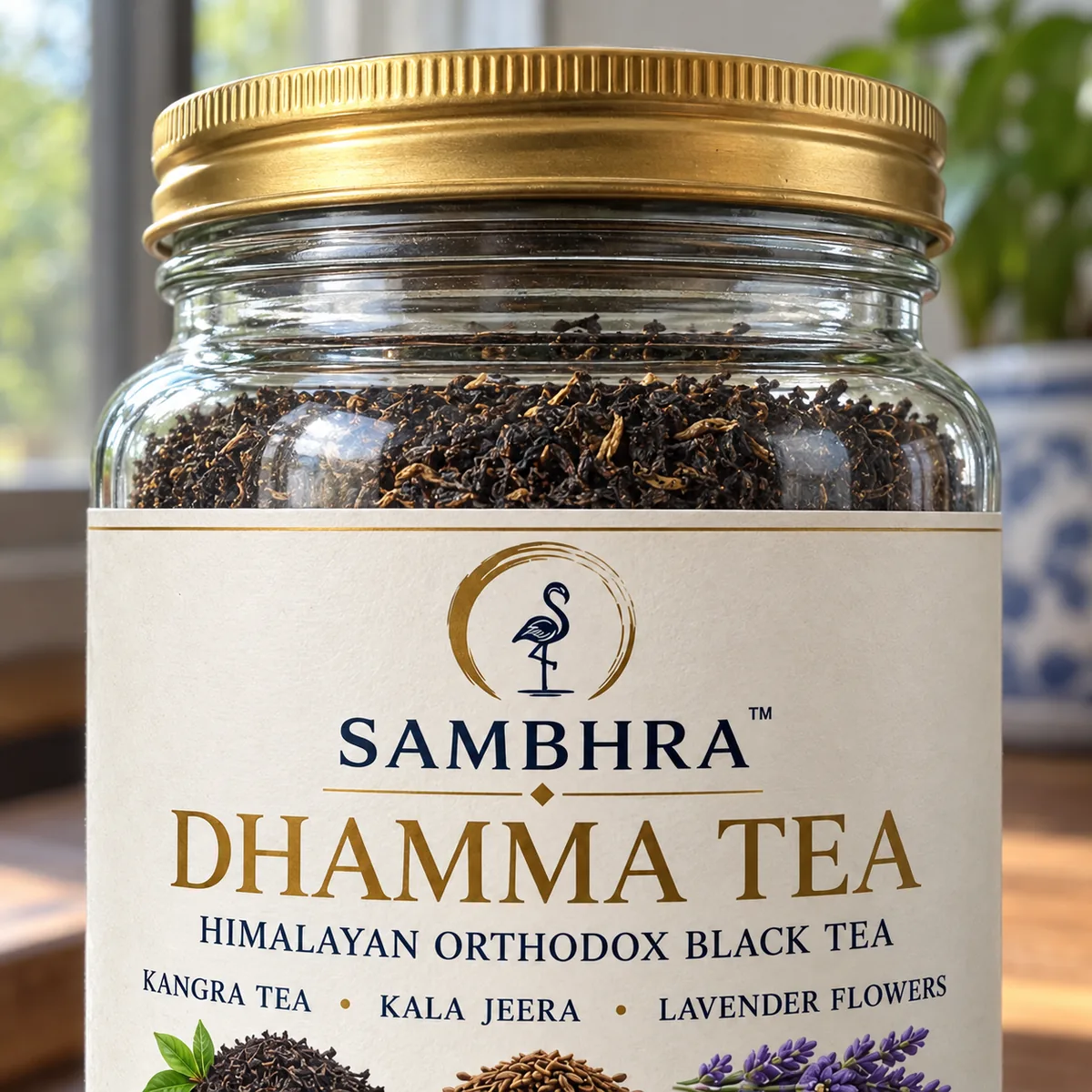
Close view of the Dhamma Tea jar: gold screw cap, glass shoulder with tea visible, and the Sambhra flamingo emblem on the cream label
03

Lavender flowers

Whole flowers, for aroma and the softer finish they leave. They are here for the character of the cup, not for a claim.

Directions

The Dhamma method

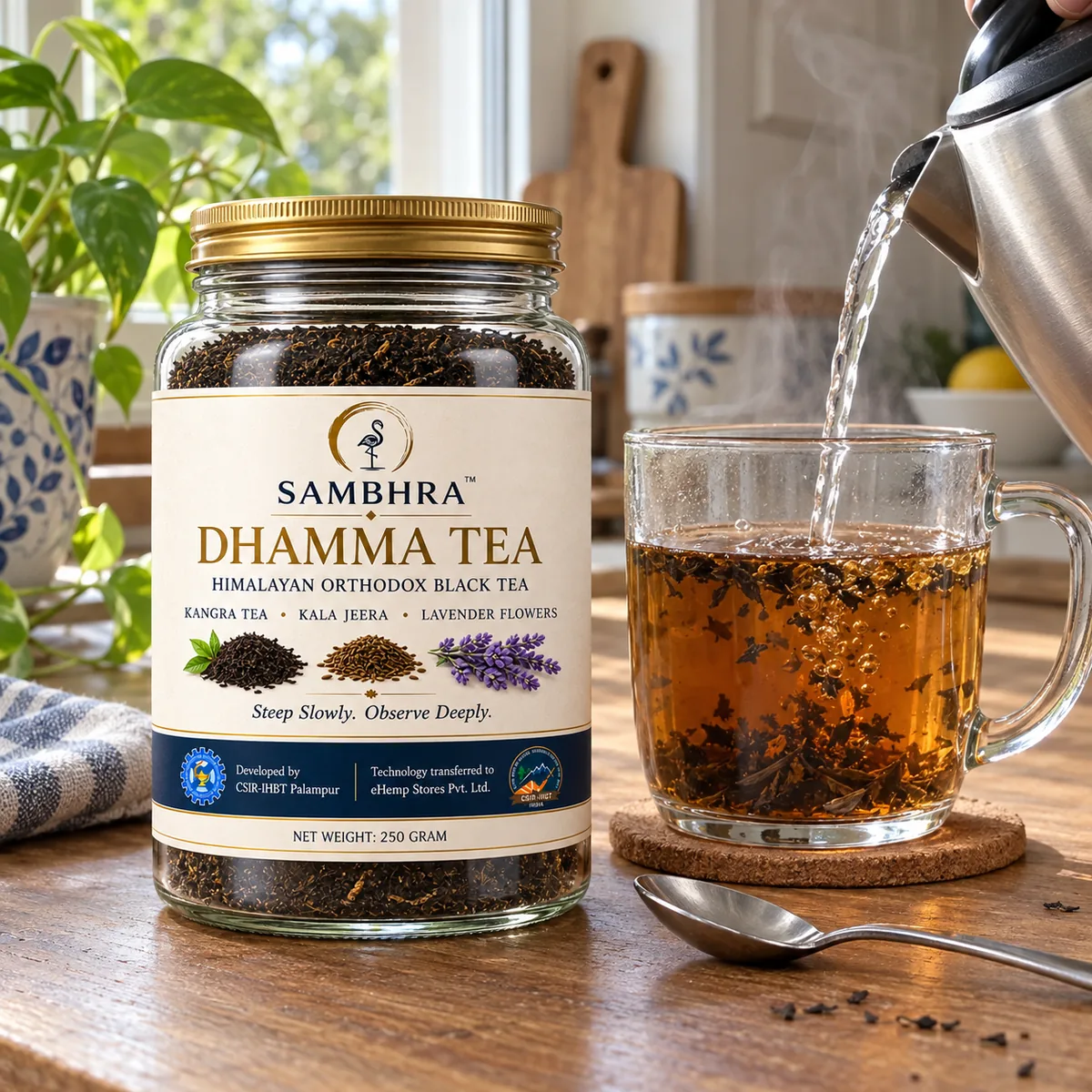
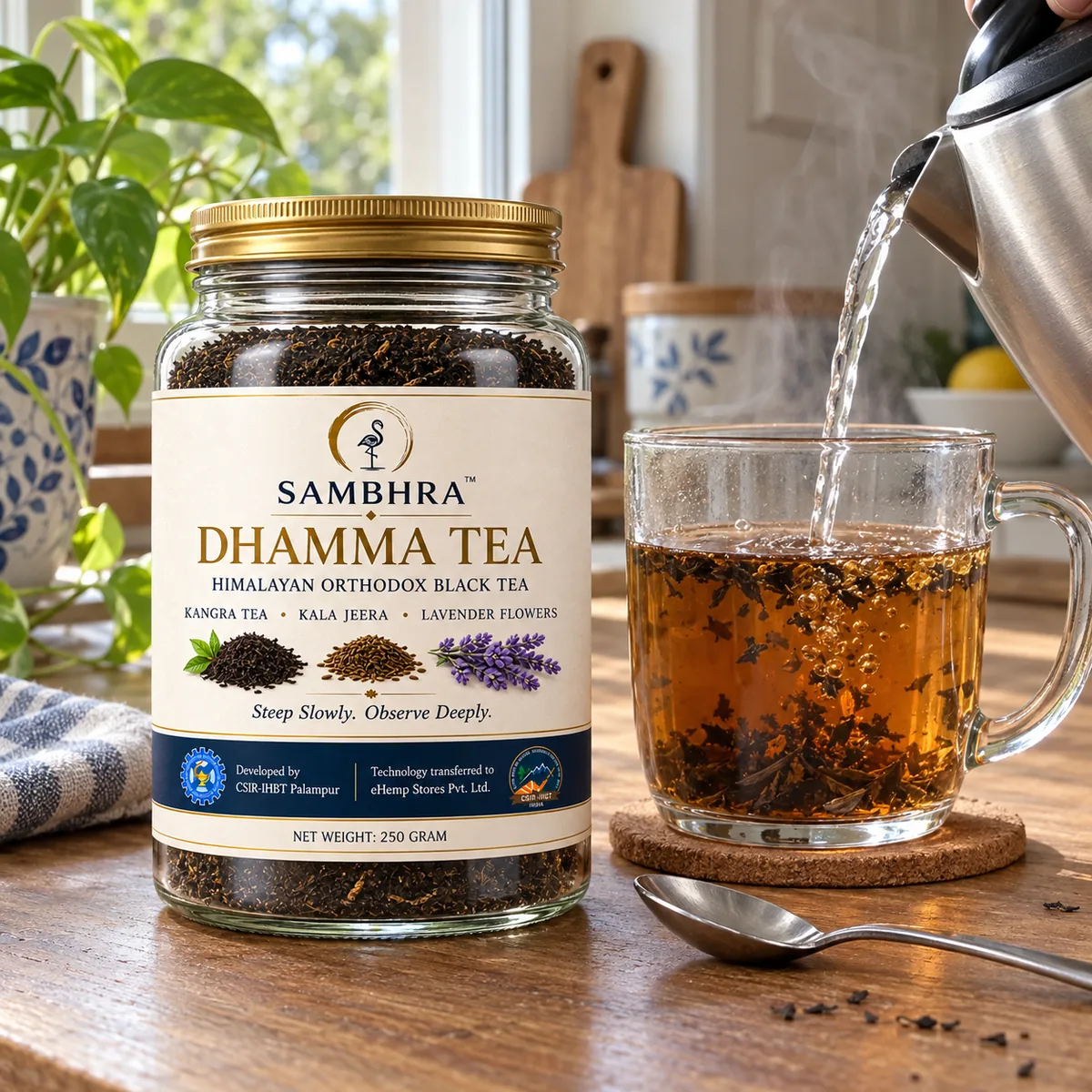
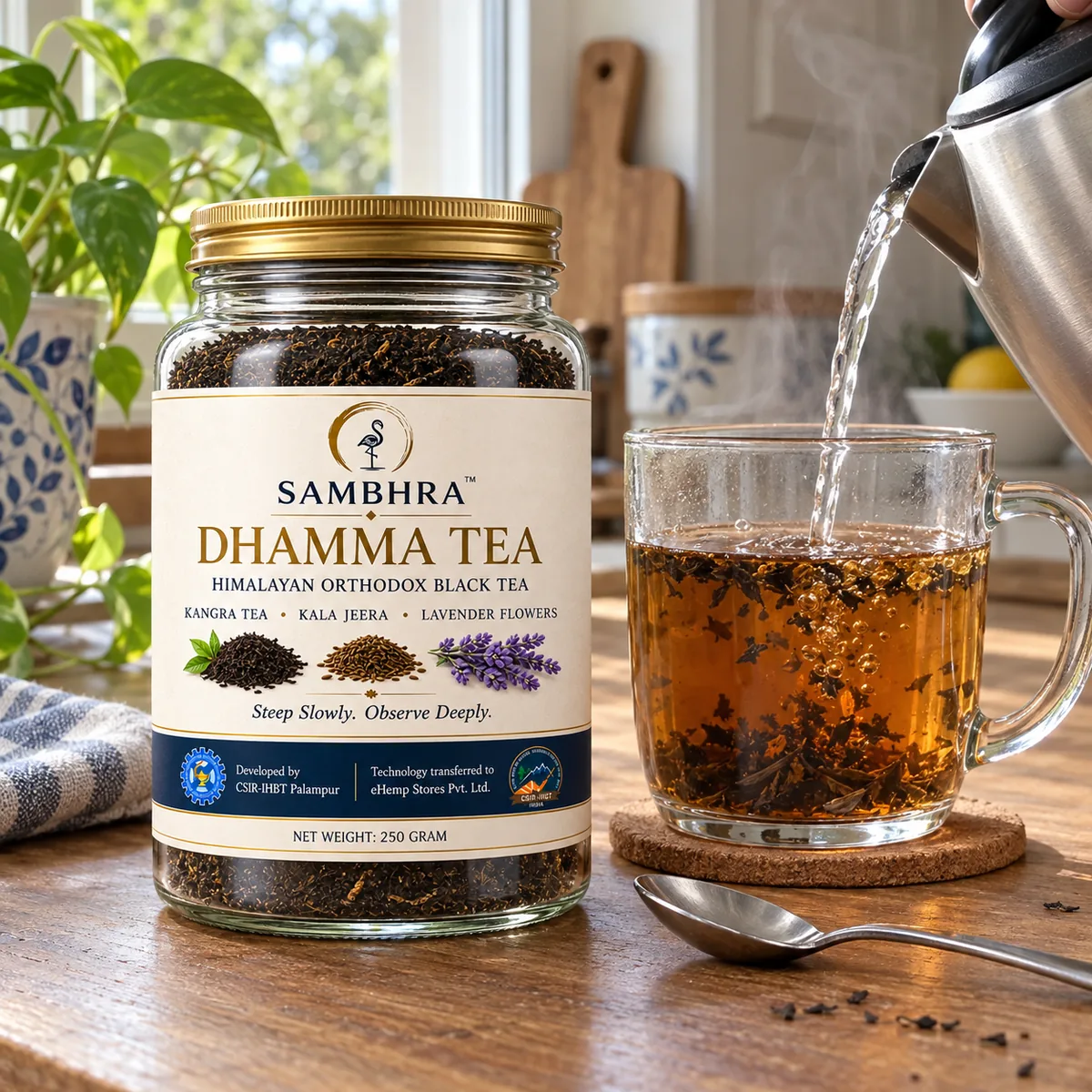
Hot water being poured from a kettle onto Dhamma Tea leaves infusing in a mug, with the 250 g jar alongside
  1. 01
    Add

    Put the leaf straight into your glass bottle, flask or pot. No infuser needed.

  2. 02
    Steep

    Pour hot water over it and let the botanicals open in their own time.

  3. 03
    Refill

    Top the vessel up through the day. The same leaf keeps giving, lighter each time.

  4. 04
    Observe

    Aroma, colour and strength shift with every infusion. That is the point of it.

Good to know

Before you begin

Dhamma Tea is a food, not a medicine, and it contains no cannabis. It is black tea, so it carries caffeine naturally. The jar seals with a screw lid and is worth keeping — store it closed and dry, away from strong smells.

Origin

Where this tea comes from

The leaf is grown in the Kangra Valley of Himachal Pradesh, one of India’s older Himalayan tea regions. Kangra Tea is a registered Geographical Indication of India, which means the name belongs to tea actually grown there. Orthodox processing keeps the leaf whole and twisted rather than cutting it, which is why it stands up to being steeped again and again.

The blend itself comes out of the CSIR-Institute of Himalayan Bioresource Technology at Palampur, in the same valley. The technology was developed there and transferred to E Hemp Stores Pvt. Ltd., which makes and sells it under the Sambhra brand. Kala jeera and lavender go in whole, for aroma and character rather than for any claim.

Questions

Common questions

Does Dhamma Tea contain cannabis?

No. Dhamma Tea is Kangra black tea with kala jeera and lavender flowers. There is no cannabis in it, no hemp, and no extract of either. It is sold here because the same company makes it.

Does it contain caffeine?

Yes. It is orthodox black tea — Camellia sinensis — so it carries caffeine naturally, as any black tea does.

What does it taste like?

Full-bodied and warm, the way a Kangra orthodox black tea is. Kala jeera sits underneath it as an earthy note and lavender closes the cup softly. It takes milk, but it is built for drinking plain and long.

How many cups does a 250 g jar make?

At two to three grams a serving, roughly 83 to 125 servings — and the method here refills the same leaf through the day, so a jar goes further than that suggests.

What is Sambhra?

The brand the tea is sold under, from E Hemp Stores Pvt. Ltd. Sambhra is the name on the jar; Dhamma Tea is the tea inside it.

What does “developed by CSIR-IHBT” mean?

The CSIR-Institute of Himalayan Bioresource Technology in Palampur is a national laboratory. The technology behind this blend was developed there and transferred to E Hemp Stores Pvt. Ltd. under licence. It is a technology transfer, not an endorsement of the shop.

Where does the name come from?

From Dhamma, the word that runs through Emperor Ashoka’s inscriptions. Here it stands for something small: attention before assertion. The same leaf, another infusion, a slightly different result — a daily exercise in noticing.

Dhamma Tea is a food product and contains no cannabis. It is not a medicine and is not offered to treat, cure or prevent any condition.

Explore Kushiva Shop the full range
Shop now