Long before it needed a licence, cannabis had a Sanskrit name and a seat in scripture. This is the short version of a very long story — and it explains why a bottle of leaf extract can be legal in India today.
A plant with a 4,000-year résumé
The Atharvaveda — one of the four Vedas, compiled roughly three thousand years ago — counts cannabis among the five sacred plants, describing it as a reliever of anxiety and a "joy-giver." Ayurveda later gave the plant the name it still carries in Indian formulations: vijaya, literally "victory."
That name is not trivia. When you see "full-spectrum vijaya extract" on a modern Indian label, you are looking at an unbroken thread from classical Ayurvedic practice to the cannabis leaf extract formats sold today.
For most of Indian history, the plant simply belonged to daily and ritual life. Bhang — a preparation of the leaves — is still openly sold from government-authorised shops in parts of Rajasthan, Uttar Pradesh, Madhya Pradesh and Odisha, and remains woven into Holi and Mahashivratri. Researchers writing in the Indian Journal of Psychological Medicine note that India's relationship with cannabis has always been closer to regulation-by-custom than prohibition.
1985: the line India drew
Under international pressure, India passed the Narcotic Drugs and Psychotropic Substances Act in 1985. It banned charas (resin) and ganja (flowering tops). But the drafters did something quietly consequential: the Act's definition of "cannabis (hemp)" excludes the leaves and seeds when not accompanied by the flowering tops.
That single definitional choice — the "bhang carve-out" — is the legal doorway through which today's leaf-extract medicines walk. It is why a formulation made from leaves, manufactured under an AYUSH licence and supplied against a prescription, sits in a completely different legal category from street cannabis. We walk through the full picture, state rules and all, in our India Cannabis Law FAQ.
The AYUSH era
In the last decade the wheel has turned again. AYUSH-licensed manufacturers now legally produce cannabis leaf extract oils, gummies and concentrates; industry trackers estimate India's cannabinoid-medicine market in the region of a billion dollars by the mid-2020s, growing at over 20% a year. A dozen brands — ourselves included — now operate openly, with doctors, batch testing, and GST invoices.
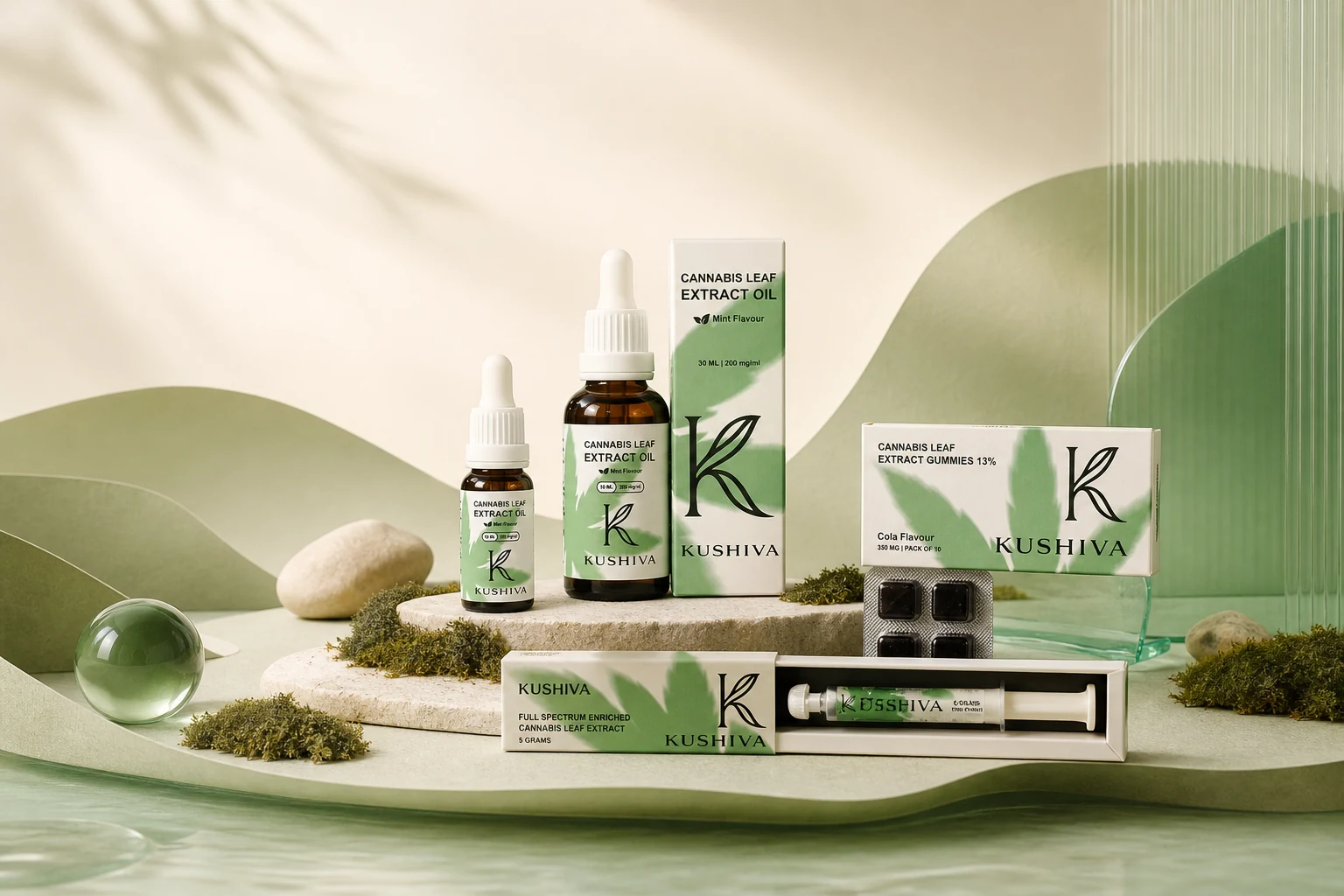
What separates this era from the bhang shop is process: modern supply is prescription-based. A registered practitioner reviews every order — ours does it at no extra fee — and the product ships only after approval. If you have never seen how that works, here is the whole process, step by step.
Why the history matters when you buy
Because the law follows the plant part and the process, not the vibes. A leaf-extract oil made under licence, batch-tested, and supplied on prescription is the continuation of vijaya's oldest use — measured, supervised, taken seriously. A product with no licence, no batch number and no doctor anywhere near it is none of those things, whatever its label borrows from the tradition.
Four thousand years in, the plant hasn't changed much. The paperwork has. We think that's progress.
Sources
- Cannabis in India — history and legal status overview
- NDPS Act, 1985 (full text, Department of Revenue) — see the s.2 definition of cannabis
- "From Bhang Shops to Cannabis in Coffee Shops" — Indian J. Psychological Medicine (2022)
- YourStory: India's shifting medical cannabis policy (2025)
Educational content, not medical or legal advice. Kushiva products are for responsible adults (18+), supplied after medical review.