Poor sleep is one of the most common wellness complaints in India, and cannabis leaf extract, or Vijaya, is increasingly discussed as a natural option. The reality, as with pain, is more measured than the marketing. Some cannabinoids show early promise for sleep, the evidence is still emerging, and Vijaya remains a prescription-regulated ingredient meant for supervised use.
This guide covers how common insomnia is in India, what recent clinical trials actually found about cannabinoids and sleep, how the format you choose changes the experience, and how to approach Vijaya for sleep responsibly.
This article is educational and is not medical advice. Vijaya (cannabis leaf extract) is a prescription-regulated ingredient in India and should only be used under the guidance of a registered medical practitioner. If you are pregnant or breastfeeding, take regular medication, or have a diagnosed health condition, speak to a doctor before considering any cannabis-based product.
Key Takeaways
- Insomnia is common in India - pooled estimates put it near a quarter of adults, and higher in older age groups.
- Early randomised trials of CBD suggest possible improvements in sleep quality, but the evidence base is still small and emerging.
- Format matters: slow-onset gummies suit staying asleep, while sublingual oil acts faster for falling asleep.
- Vijaya for sleep should be doctor-supervised, prescription-based and started at a low dose.
Quick Answer
Cannabis leaf extract may help some people fall or stay asleep, and early CBD trials are encouraging, but the evidence is still limited and results vary from person to person. In India, Vijaya is available only on prescription, so it should be used under medical guidance, at a low starting dose, alongside good sleep habits - not as a first-line sleeping pill.

How common is insomnia in India?
Sleep problems are widespread. A systematic review of Indian studies put the pooled prevalence of insomnia at about 25.7% (Systematic Review of Sleep Problems in India, 2023), and among older adults the rate is higher still - roughly 36% of adults aged 60 and above reported insomnia symptoms in analysis of the Longitudinal Ageing Study in India (Journal of Activity, Sedentary and Sleep Behaviors, 2024). Yet treatment-seeking remains low, which pushes many people toward self-directed remedies before they ever speak to a doctor.
What does the evidence say about cannabis and sleep?
The most useful recent data comes from randomised controlled trials of cannabidiol (CBD). In one placebo-controlled trial, 150 mg of CBD taken nightly improved objective sleep efficiency and overall well-being in people with moderate-to-severe insomnia (Journal of Clinical Sleep Medicine, 2024). A separate double-blind, placebo-controlled crossover study tested a CBD-and-terpene formulation for sleep in people with insomnia (Journal of Clinical Sleep Medicine, 2025).
These are promising but early signals. Trials are still small, formulations differ, and reviewers consistently note that robust, long-term evidence is limited. In other words, cannabinoids are worth taking seriously for sleep - and worth approaching with realistic expectations rather than as a guaranteed fix.
Vijaya and sleep in the Ayurvedic tradition
Vijaya's calming, sleep-supporting use is not new. Classical Ayurvedic texts describe Vijaya formulations for concerns that include disturbed sleep, and this traditional use sits alongside the modern clinical interest. That combination - documented traditional use plus emerging trial data - is part of why sleep is one of the most common reasons people ask about cannabis leaf extract.
Does the format change how it helps sleep?
Yes, and the difference is practical. The route you take Vijaya by changes how quickly it acts and how long it lasts, which matters a great deal for sleep:
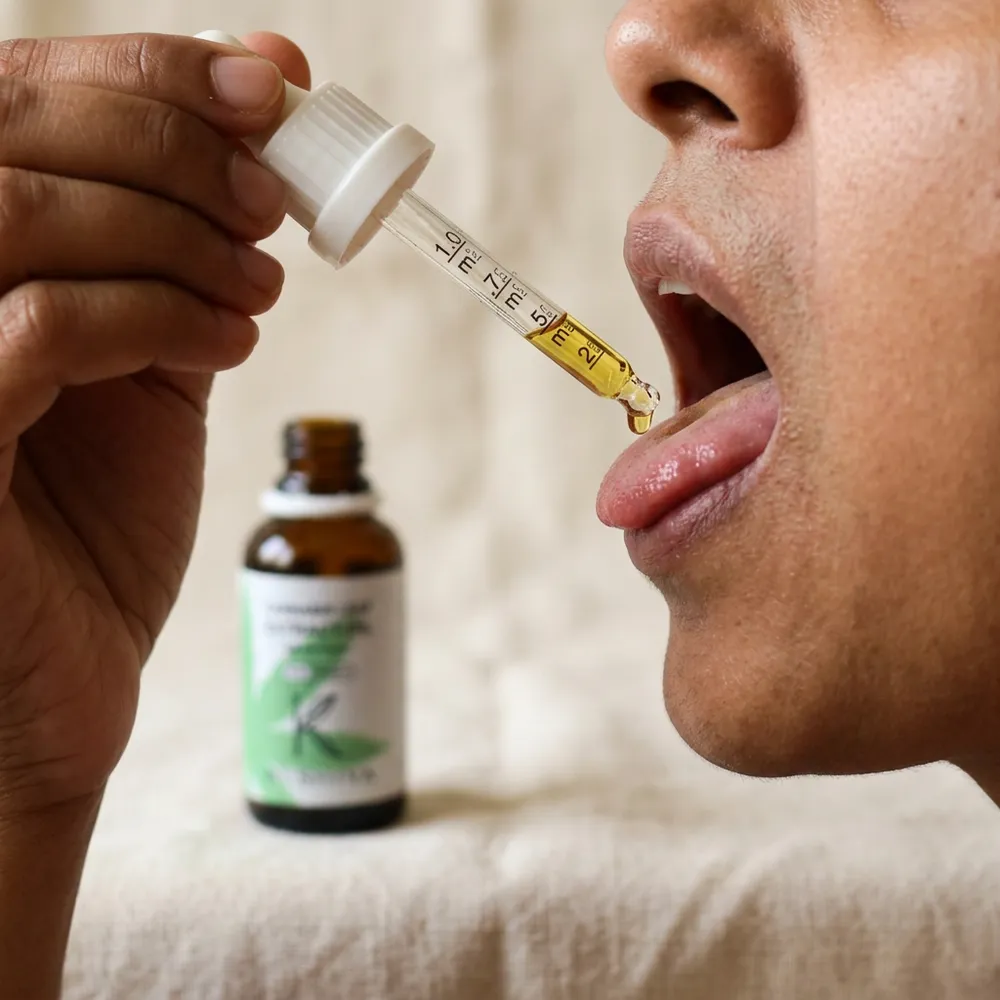
- Sublingual oil - held under the tongue, it tends to act within about 15 to 45 minutes, which suits people who struggle to fall asleep.
- Gummies or capsules - absorbed through the digestive tract, they act more slowly and last longer, which can suit people who wake during the night.
We compare the two in detail in cannabis oil vs gummies. For sleep specifically, a doctor may suggest one over the other based on whether your difficulty is falling asleep or staying asleep.
Using Vijaya for sleep safely
Because cannabinoids affect everyone differently, a low-and-slow, supervised approach is safest. The principles a doctor will typically apply are simple:
- Start at the lowest sensible dose and increase only gradually, if needed.
- Take it well before bedtime so the timing matches the format's onset.
- Pair it with sleep hygiene - consistent timings, less late screen time, and limited caffeine and alcohol.
- Review regularly, and stop if it is not helping or leaves you groggy.
Common side effects can include next-day grogginess, dry mouth and changes in appetite. Vijaya is not appropriate during pregnancy or breastfeeding, and anyone on regular medication should check for interactions first.
How Kushiva approaches sleep support
Every Vijaya order at Kushiva goes through a prescription and medical-review step, and our extracts are lab-tested with published potency so you and your doctor know exactly what you are taking. For sleep, a titratable cannabis leaf extract oil lets a practitioner fine-tune the dose, while measured-dose gummies offer slower, longer-lasting, convenient dosing. See also measured dosing, every time.
Frequently Asked Questions
Can Vijaya help me sleep?
It may. Early randomised trials of CBD suggest improvements in sleep quality for some people, and Vijaya has a long traditional use for disturbed sleep. However, the modern evidence is still emerging and results vary, so it should be tried under medical guidance rather than assumed to work.
Is Vijaya better than sleeping pills?
That is not a decision to make alone. Vijaya and conventional sleep medicines work differently and carry different risks. A registered practitioner can advise whether a supervised Vijaya trial is appropriate for your situation, especially if you already take other medication.
Will it make me groggy the next day?
It can. Next-day grogginess is a common, dose-related effect, particularly with longer-lasting formats or higher doses taken late. Starting low, dosing earlier in the evening and choosing the right format all help reduce it.
How long before bed should I take it?
It depends on format. Sublingual oil often acts within 15 to 45 minutes, while gummies or capsules can take one to three hours to peak. Your doctor can match the timing and format to whether you struggle to fall asleep or to stay asleep.
Do I need a prescription?
Yes. In India, Vijaya (cannabis leaf extract) can be supplied only against a valid prescription from a registered medical practitioner, which is why Kushiva includes a medical-review step before dispatch.
Related reading: Vijaya for chronic pain · cannabis oil vs gummies.
Better sleep usually comes from a combination of good habits and, where appropriate, the right supervised support. If you would like to explore Vijaya for sleep, start with a doctor's review - you can browse our lab-tested range to begin.
Educational information only, not medical advice. Vijaya is prescription-regulated in India; use it only under a registered practitioner's guidance.